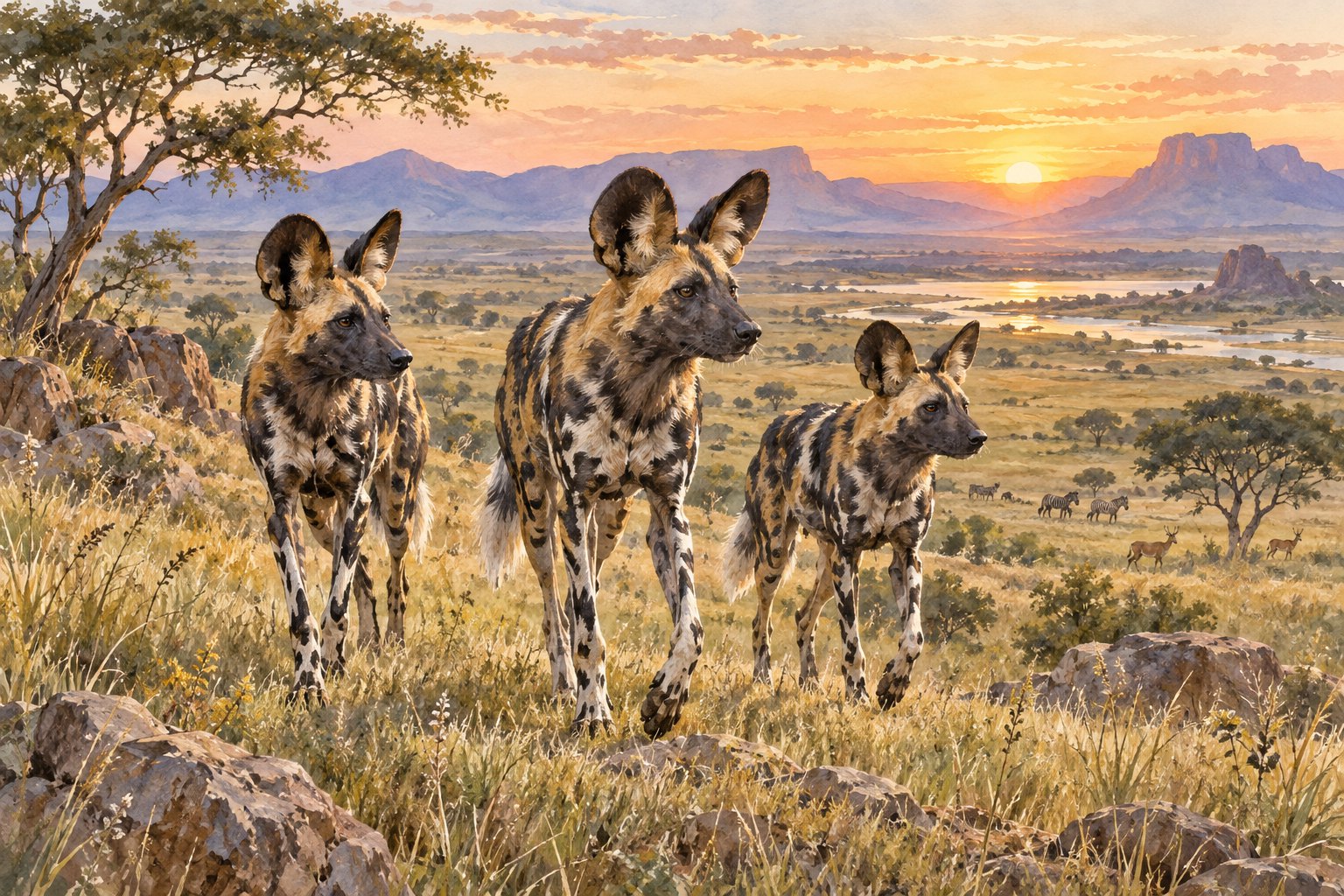
Three wild dog brothers making an extraordinary journey across Africa have the makings of an irresistible animal adventure: a small group, a vast landscape, and a family connection that makes the distance feel personal. The Guardian’s headline describes their journey as Africa’s longest and invokes the phrase “Like a Disney movie.” For readers wondering which movie this is, the distinction matters: the subject is a reported wildlife event, and Disney is the comparison.
That comparison deserves attention on its own. It tells us how readily we organize animal lives into stories about courage, belonging, and brotherhood. My reading is that the brothers’ story feels cinematic because it offers a relationship to follow through space. Yet its emotional force also depends on something a conventional adventure can obscure: these animals have lives beyond the meanings we assign them.
Why three brothers immediately suggest a movie
A journey supplies movement; a relationship supplies stakes. Three animals traveling can register as an interesting occurrence. Describe them as brothers, and a reader starts thinking about connection. The imagined question changes from how far they went to what traveling together might mean. That shift happens before we know anything about their individual temperaments.
For a screenwriter, a trio offers tempting possibilities. One character could lead, another hesitate, and a third mediate. Different reactions could turn the same obstacle into three competing experiences. Those are useful dramatic devices, but assigning them to these particular brothers would invent characterization. Being siblings does not establish who is brave, cautious, dependent, or protective.
The more interesting critical approach is to notice how little characterization our initial investment requires. Kinship and movement are enough to make us curious. We want to keep the group in view. We begin imagining what separation would mean, even without evidence that a separation occurred. The story activates our narrative expectations faster than it supplies answers.
What the Disney comparison gives—and what it assumes
Here, “Like a Disney movie” functions as emotional shorthand. It invites an audience to anticipate accessible adventure, recognizable relationships, and a journey that will acquire meaning through its ending. The phrase makes an unfamiliar wildlife story approachable by placing it beside familiar entertainment.
There is value in that invitation. Readers do not need specialist knowledge to understand why three related animals on a remarkable journey might hold their attention. A cinematic comparison can create the first moment of interest from which closer observation becomes possible.
But the comparison also introduces expectations that reporting cannot automatically satisfy. A movie can establish a goal, organize setbacks around it, and make arrival feel like a reward. The existence of a remarkable real journey does not establish that its participants experienced a shared ambition in any human sense. Nor does an evocative headline promise a film’s carefully arranged emotional resolution.
That distinction resembles the question of how a story’s promise shapes audience expectations, explored in our commentary on Chiikawa and the island’s promise. With the wild dog brothers, however, the expectation begins outside a screenplay. Readers bring it to living subjects.
Following the brothers without writing their thoughts
Character-centered criticism usually asks what someone wants, what they fear, and how their choices change them. Applied to actual animals, those questions need adjustment. An observed action and an interpretation of that action are different things. A pause might be visible; doubt is an explanation someone adds.
A hypothetical screen treatment of this journey would therefore face an important creative choice. It could use narration to assign intentions, or it could let observable behavior carry more of the emotional weight. Neither approach is automatically effective. The question is whether the presentation helps viewers understand what they are seeing or quietly turns speculation into certainty.
Consider how editing could manufacture a relationship. A shot of one animal looking back, followed by another animal moving forward, might suggest reassurance. Without the surrounding circumstances, that meaning could belong primarily to the sequence of images. Music could strengthen the impression until an interpretation feels like a witnessed fact.
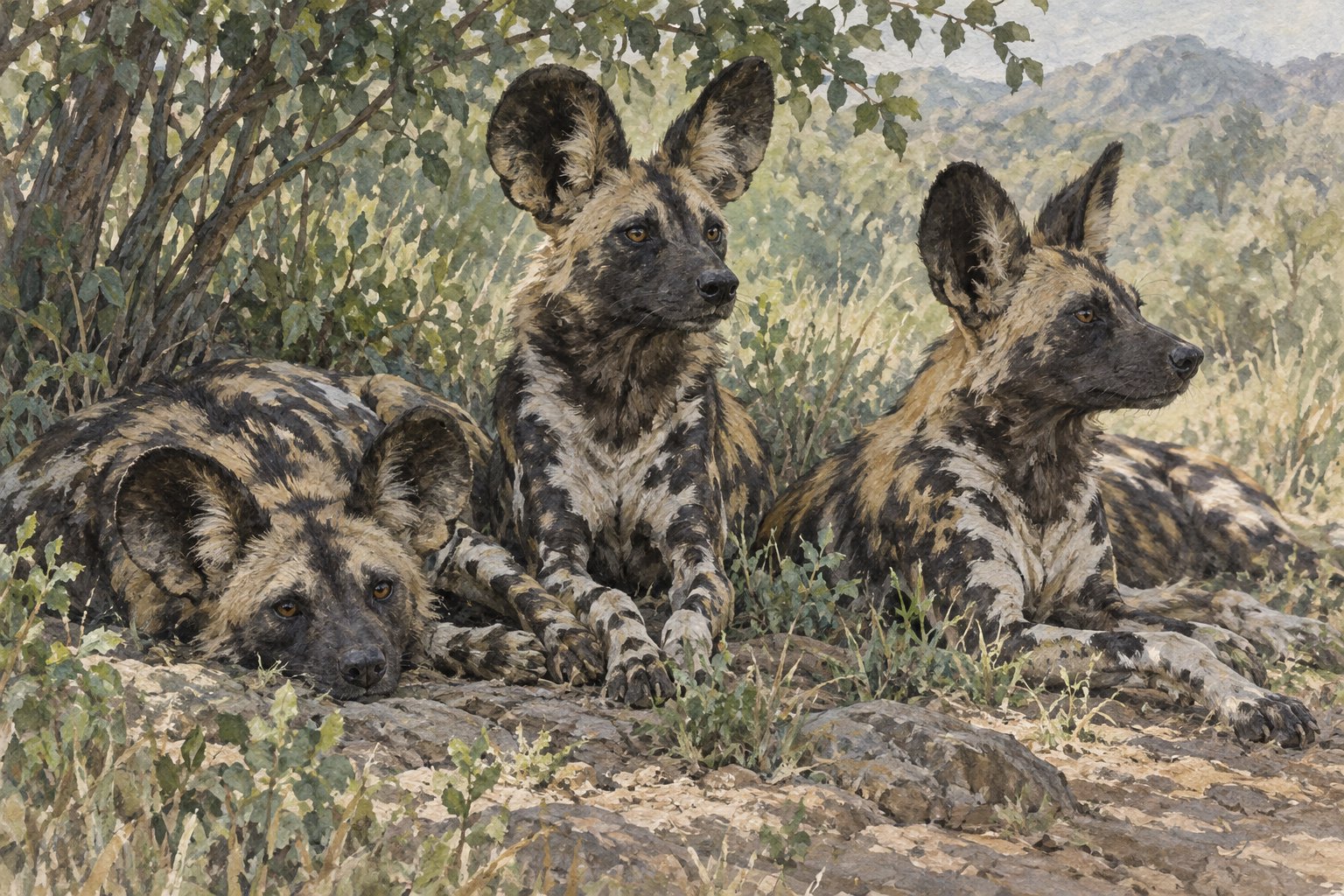
My preference would be for a treatment that leaves room for uncertainty. Viewers can care about animals without receiving an imagined translation of every glance. Attention to their physical presence—their positions in relation to one another, their movement through a frame—could be compelling without a narrator declaring what brotherhood means to them.
The landscape should do more than look spectacular
The headline’s emphasis on distance encourages a panoramic imagination: small figures against an immense continent. That is an effective visual contrast, but scale alone can flatten a journey. A beautiful horizon tells us little about what moving across the foreground entails.
In a possible adaptation, the stronger visual approach would alternate broad geography with the animals’ immediate surroundings. A distant view establishes scale. A closer view makes viewers attend to the next stretch of ground. These are suggestions about filmmaking, not descriptions of footage from this event.
The dramatic principle has a counterpart in our analysis of movement and practical goals in Resident Evil: an audience often understands a journey through what must happen next. For the brothers’ story, that principle could focus attention without requiring fabricated confrontations or a villain.
A remarkable journey does not need a victory speech
The word “longest” gives the story an immediate measure of distinction. As a reader, though, I find the brothers more compelling than the superlative. Records encourage comparison with other journeys; relationships encourage sustained attention to this one. The distance attracts the eye, while the shared passage gives the imagination something to hold.
A conventional ending might try to convert that passage into a lesson about perseverance. Such a lesson would be an interpretation, not an explanation of the animals’ behavior. It could also make everything that preceded the ending feel inevitable, as though the landscape had been arranged to test deserving protagonists.
The deeper appeal of these three brothers is the possibility of caring without that guarantee. Their story invites the emotional concentration we bring to movies while asking us to tolerate less access to motive and meaning. That is a richer response than fitting them into three familiar character types. Cinema gives us a language for recognizing the pull of their journey; thoughtful attention lets the animals remain more than the roles we imagine for them.
Original content by this site's editorial team. Published: September 17, 2026 at 06:21:23 PDT (Los Angeles time)