Ken Russell’s The Devils makes a frightening proposition: knowing that someone is imperfect can become an excuse to stop caring whether an accusation against them is true. Its restored return invites attention to that distinction. Beneath the religious spectacle and calculated outrage sits a tragedy about people whose desires become useful to institutions with plans of their own.
The BFI identifies the new edition of the 1971 film as a 4K restoration following Russell’s intended cut. That makes this revival an opportunity to reconsider the work’s dramatic structure as well as its notorious imagery. [BFI restoration announcement](https://www.bfi.org.uk/news/ken-russells-devils-definitive-4k-restoration-launch-ahead-major-bfi-retrospective)
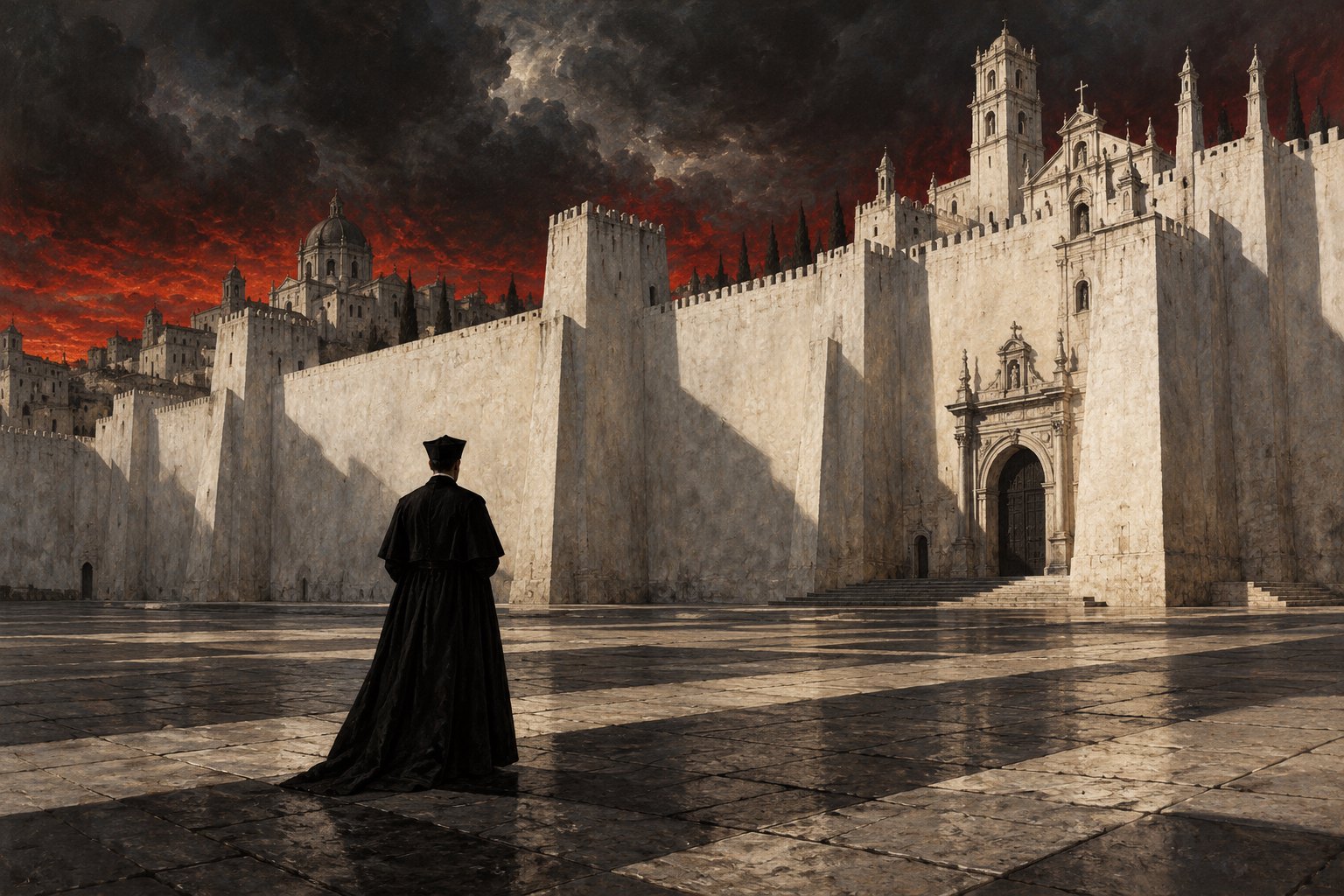
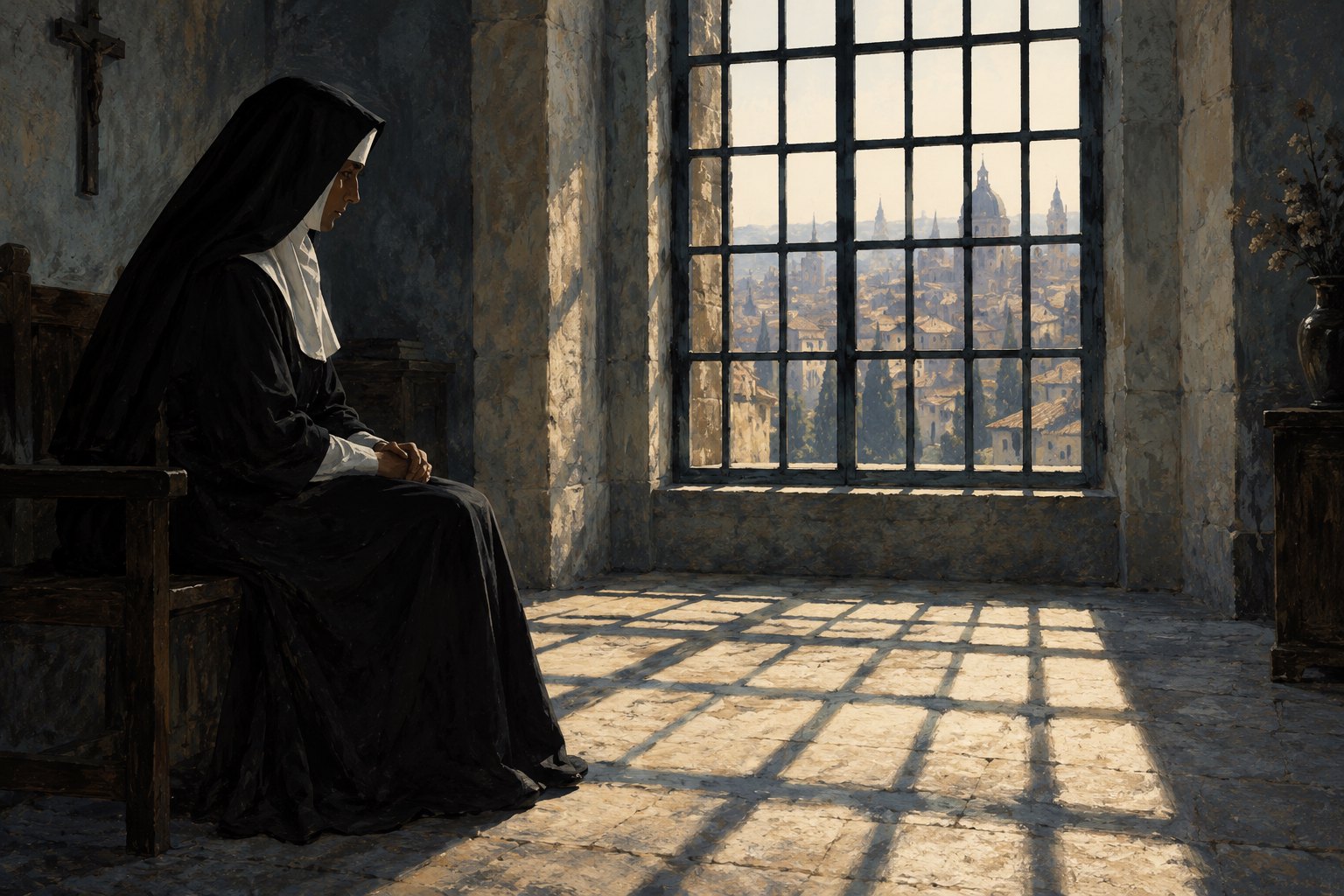
Major spoilers follow, including the ending. The film contains sexual imagery, religious desecration, coercion, and graphic torture. The illustrations accompanying this review are symbolic interpretations rather than film stills.
Grandier’s flaws make the injustice harder to dismiss
In seventeenth-century Loudun, Father Urbain Grandier stands between his city and authorities seeking to dismantle its independence. Accusations that he has bewitched a convent give his enemies a means of removing him. Oliver Reed plays the priest as a man accustomed to commanding attention, with the confidence of someone who has rarely needed to separate persuasive force from moral authority.
That confidence is essential to the film’s discomfort. Grandier enjoys the privileges of his position. His sensuality and vanity complicate the sympathetic response that a persecution narrative usually encourages. Russell asks the audience to recognize an injustice without first receiving a certificate of the victim’s goodness.
Grandier’s admission, “I have been a man. I have loved women. I have enjoyed power,” captures the distinction. He acknowledges a life of appetite; that acknowledgment cannot honestly establish the supernatural conspiracy his interrogators demand. [Collected film dialogue](https://www.moviequotes.com/s-movie/the-devils/)
Reed’s performance gives that distinction physical weight. His presence initially feels expansive, capable of occupying an entire room. As Grandier’s options narrow, the same solidity becomes resistance. The dramatic movement is compelling because it asks how much of a person remains when the social advantages that sustained his confidence have been stripped away.
My reading is that Grandier becomes most persuasive when persuasion has ceased to matter. He can no longer expect charisma to save him. What remains is a refusal to help his persecutors make their version of events appear voluntary.
Sister Jeanne wants to be seen—and becomes useful
Vanessa Redgrave’s Sister Jeanne supplies the film’s most difficult emotional perspective. Her fixation on Grandier develops inside a life structured by confinement and frustrated desire. The imagined priest offers an escape from that life, but imagination cannot give her a reciprocal relationship.
Redgrave makes Jeanne’s longing feel painfully exposed. Her authority within the convent cannot protect her from humiliation or loneliness. She can command others while remaining unable to obtain the intimacy she wants. Those contradictory positions make her more troubling than a simple portrait of thwarted attraction would allow.
Jeanne’s accusations become valuable to people whose ambitions extend far beyond her. Crucially, her later admission that she lied does not stop the proceedings: Father Barre interprets the retraction as another expression of demonic influence. The accusation can therefore validate the inquiry, while its withdrawal validates it again. The AFI’s synopsis documents this devastating reversal. [AFI film synopsis](https://catalog.afi.com/Film/54241-THE-DEVILS)
The political horror lies in that loss of ownership. Jeanne’s speech carries authority only while it serves the prosecution. When she attempts to change its meaning, men claiming special access to truth explain away her words.
Sympathy for her does not require overlooking the damage she causes. It requires recognizing how responsibility and exploitation can coexist. That attention to competing claims also informs our discussion of faith, family loyalty, and institutional power in Fjord.
The exorcism turns suffering into public evidence
Father Barre’s function is to make an interpretation look like an observable fact. Through the spectacle of exorcism, distress becomes proof of possession, and possession becomes proof against Grandier. The performance supplies its own apparent confirmation.
Russell’s excess makes that process visible. Public excitement matters because the persecution needs spectators willing to accept a compelling show as an explanation. An audience can feel that it has witnessed something decisive without understanding how the event was arranged.
This is where the film’s abrasive style earns its place. Its theatricality makes authoritative behavior appear rehearsed and dependent on spectators. People occupy roles—accuser, healer, sinner, witness—and the machinery keeps moving even when those roles no longer fit what they know.
There is a cost. The relentless grotesquerie can flatten distinctions between individual participants, and some viewers may find themselves pushed toward exhaustion before the tragedy reaches its full force. My judgment is that the film remains strongest when a human hesitation interrupts the spectacle. A flicker of doubt can be more disturbing than another escalation.
Why restoring the film matters beyond shock value
A restoration invites two separate judgments: whether a film has been presented more faithfully, and whether its artistic choices succeed. The first does not settle the second. Viewers can welcome access to Russell’s intended work while questioning how it depicts suffering, sexuality, or women’s bodies.
Russell himself argued that American cuts damaged the story’s intelligibility. His account of the censorship makes clear that the dispute concerned the relationship between images and meaning, alongside the intensity of individual shots. [Russell’s interview with Sight and Sound](https://www.bfi.org.uk/sight-and-sound/interviews/my-one-political-film-ken-russell-devils)
For this review, the most productive way to approach the restored edition is through its characters. Ask what an image reveals about Jeanne’s imagined intimacy, Grandier’s vulnerability, or the authorities’ appetite for control. That keeps the discussion anchored in the drama rather than turning the film into a checklist of forbidden material.
The same approach helps explain its visual severity. Derek Jarman’s monumental architecture makes people look exposed even when surrounded by walls. Protection and confinement occupy the same spaces. The city can defend its autonomy while the convent restricts the lives within it; neither structure guarantees safety from those who control the terms of judgment.
The ending separates guilt from conscience
“I am innocent and I am afraid” is Grandier’s most piercing declaration. The fear prevents his resistance from becoming an effortless heroic pose. He understands what awaits him, and his refusal acquires meaning because terror remains present. The line is recorded in the AFI’s account of the film. [AFI film synopsis](https://catalog.afi.com/Film/54241-THE-DEVILS)
Grandier’s execution is followed by the destruction of Loudun’s fortifications. That sequence makes the political result brutally legible. Madeleine’s departure through the ruined city then gives the ending a surviving human perspective: someone must continue living after the authorities have achieved their objective.
This is the kind of ending that rewards reading a film’s theme through its characters’ hardest choices. Grandier cannot preserve his body or his city, but he can refuse to endorse the lie demanded of him. Madeleine cannot undo the destruction, but her survival prevents the conclusion from belonging entirely to the men who engineered it.
The Devils remains a demanding, sometimes punishing film. Its enduring force comes from the space it preserves between moral imperfection and deserved punishment. Grandier’s failures are real within the drama; the case manufactured against him remains false. Russell makes that distinction feel worth defending even when the crowd has stopped listening.
Original content by this site's editorial team. Published: October 22, 2026 at 03:38:30 PDT (Los Angeles time)