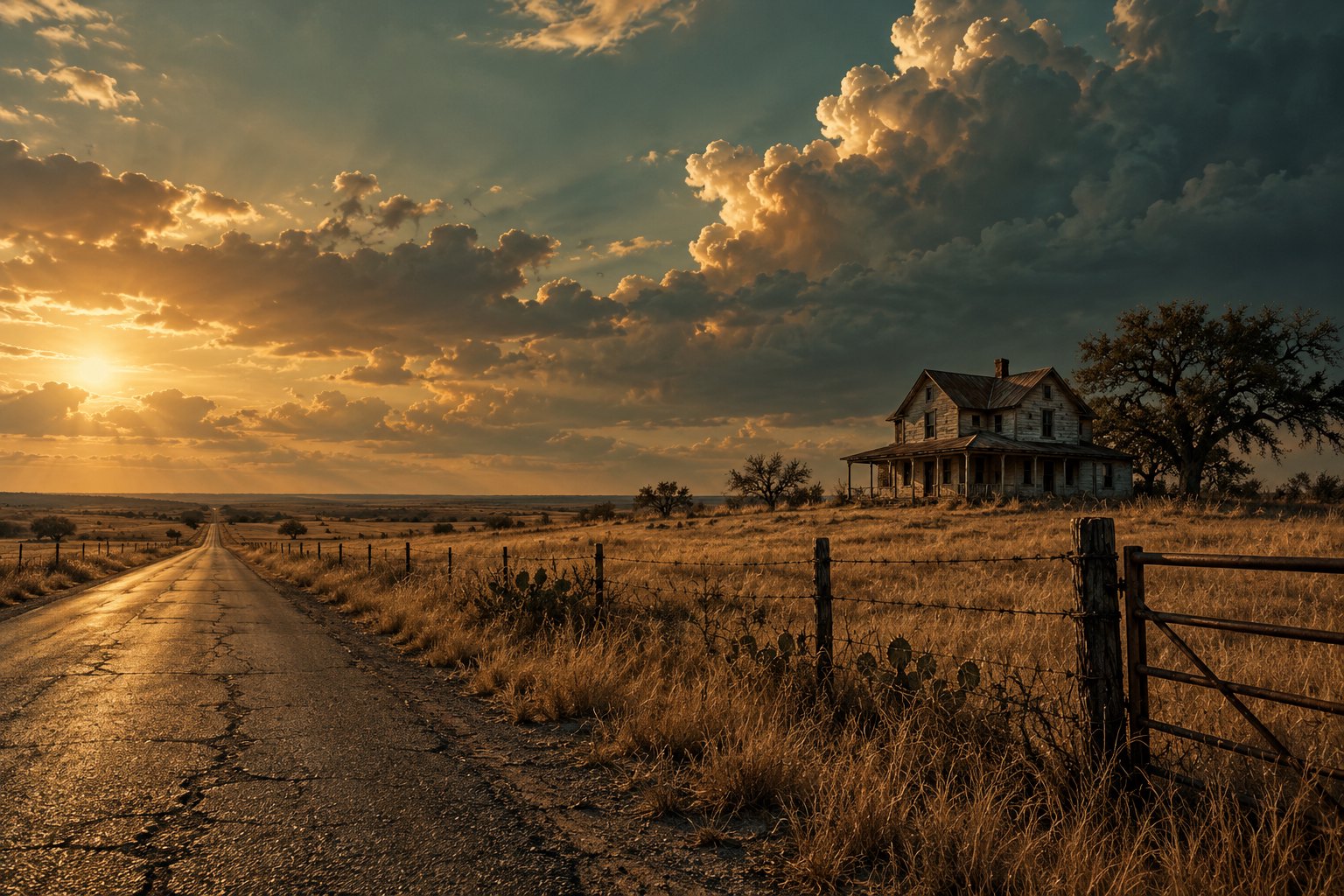
Texas horror begins with Leatherface for many viewers, but the state's screen history extends from El Paso's strange independent productions to Texarkana's crime-haunted streets and the Texas locations behind seemingly ordinary school corridors. Four films make a revealing starting point: The Texas Chain Saw Massacre, The Town That Dreaded Sundown, Manos: The Hands of Fate, and The Faculty.
These are different kinds of classics. One is a towering achievement in sustained terror; another preserves an awkward, fascinating corner of regional filmmaking. Their Texas connections also differ: a story's setting, a production's shooting location, and a filmmaker's roots are distinct things. What connects them artistically is the frightening possibility that familiar people and places offer no protection.
Spoiler warning: The following criticism discusses major developments and the ending of The Texas Chain Saw Massacre, with broader plot discussion of the other films.
The Texas Chain Saw Massacre: Sally's ordeal gives the legend its force
Tobe Hooper's 1974 film belongs at the center of any Texas horror retrospective. Set in rural Texas and filmed in the state, it makes the landscape physically oppressive without needing to turn every open field into a picturesque warning. Daylight exposes everything while explaining almost nothing.
Sally Hardesty, played by Marilyn Burns, travels with her brother Franklin and their friends after reports of cemetery vandalism raise concerns about their grandfather's grave. That starting point matters. Their journey begins with an obligation to family, then leads them into a household where family loyalty has become monstrous.
Franklin makes the group's vulnerability uncomfortable
Franklin is often treated as the irritating passenger viewers must tolerate before the horror starts. That reading misses what his presence contributes. As a wheelchair user navigating inhospitable terrain, he experiences the trip's difficulties more sharply than his companions. His complaints interrupt their freedom to treat the countryside as an adventure.
My reading is that the friction between Sally and Franklin makes the film more disturbing. They do not become idealized siblings simply because danger approaches. Sally's frustration and responsibility coexist. Hooper leaves those ordinary tensions unresolved, giving the violence the cruelty of an interruption rather than the neatness of a punishment.
Leatherface's household turns care into captivity
The hitchhiker's line, “My family's always been in meat,” compresses the film's central horror into a grotesquely casual introduction. Work, inheritance, and the treatment of bodies already belong to the same conversation. The characters hear an unsettling stranger; the audience eventually hears a household explaining itself.
Leatherface is terrifying partly because his behavior resembles frantic domestic labor. Gunnar Hansen's performance gives his movements an agitated urgency. He can appear overwhelmed by the people entering the house even as he inflicts appalling violence on them. That observation does not excuse him. It makes the household's internal logic more unnerving: atrocity has become something that must be managed before the others return.
“Look what your brother did to the door!” supplies a flash of absurd domestic comedy. Property damage registers as a family grievance amid unimaginable cruelty. The joke exposes a moral system capable of worrying about the house while refusing to recognize its victims as people.
For Sally, the gas station offers the possibility of returning to an intelligible world: an adult, a business, someone who might help. Its owner's betrayal destroys that hope. The terror expands because the house is no longer an isolated aberration. Something apparently ordinary outside it participates in the same violence.
The ending offers escape without reassurance
At the dinner table, Sally becomes the unwilling center of a family ritual. Tight framing and the insistence on her eyes make the sequence feel less like an action problem to solve than an experience she can barely survive. Burns gives the scene its emotional weight through exhaustion, panic, and continued resistance.
Sally eventually escapes in a pickup truck, while Leatherface remains behind with his roaring saw. Her laughter does not make the ending comfortably triumphant. To me, it sounds like the body releasing more terror than language can organize.
This remains the strongest film here because its form keeps returning us to vulnerability. The violence has less explicit bloody detail than its reputation suggests, but that does not make it mild. Duration, sound, and helplessness do much of the damage. Viewers seeking a gentler evening should consult our Halloween viewing guide organized around different moods before committing to this one.
The Town That Dreaded Sundown: fear spreads across a community
Charles B. Pierce's original The Town That Dreaded Sundown draws loosely on the 1946 Texarkana murders and used locations on both sides of the Texas-Arkansas border. Its dramatized incidents and characters should not be mistaken for a dependable reconstruction of the crimes.
Its useful counterpoint to Hooper's film is perspective. Investigators, including Deputy Norman Ramsey and Captain J. D. Morales, occupy substantial narrative space. Instead of keeping us within one survivor's immediate ordeal, the film asks what repeated attacks do to a community's confidence that someone can restore order.
From the investigators' perspective, every unsuccessful effort makes professional authority less reassuring. From the residents' perspective, familiar nighttime spaces acquire new meanings. Privacy becomes exposure; an ordinary journey becomes a calculation.
My reservation is the comic police material, which can dissipate the tension rather than deepen it. Even so, the film's uneasy combination of procedural investigation and masked violence gives it a distinctive place in this collection. Choose it for communal dread and regional atmosphere, with the understanding that its tone is uneven.
Manos: The Hands of Fate: a cult artifact with uncomfortable implications
Made in El Paso, Harold P. Warren's Manos: The Hands of Fate opened there in 1966. Its later association with Mystery Science Theater 3000 helped introduce its peculiar rhythms to audiences far beyond its original reach.
The premise sends a traveling family into the domain of a sinister cult. Where Hooper makes movement urgent and physically punishing, Manos repeatedly lets movement stall. Its pauses, awkward exchanges, and uncertain pacing can make the danger feel suspended rather than intensified.
As conventional suspense, I find it much less effective than its companions here. As an unsettling object, however, it has a stubborn identity. Looking past the invitation to laugh reveals a story in which a family's dependence on strangers gives another household power over them. The failure of hospitality remains unpleasant even when the filmmaking cannot consistently control the effect.
Watch it for curiosity about regional independent cinema and cult reception. Calling it a classic describes its enduring place in viewing culture; it should not promise polished storytelling.
The Faculty: Texas locations become a laboratory for conformity
Robert Rodriguez's The Faculty arrived in 1998 and filmed in Austin, San Marcos, Dallas, and Lockhart. Its Texas connection is therefore concrete even though its story concerns the fictional Herrington High.
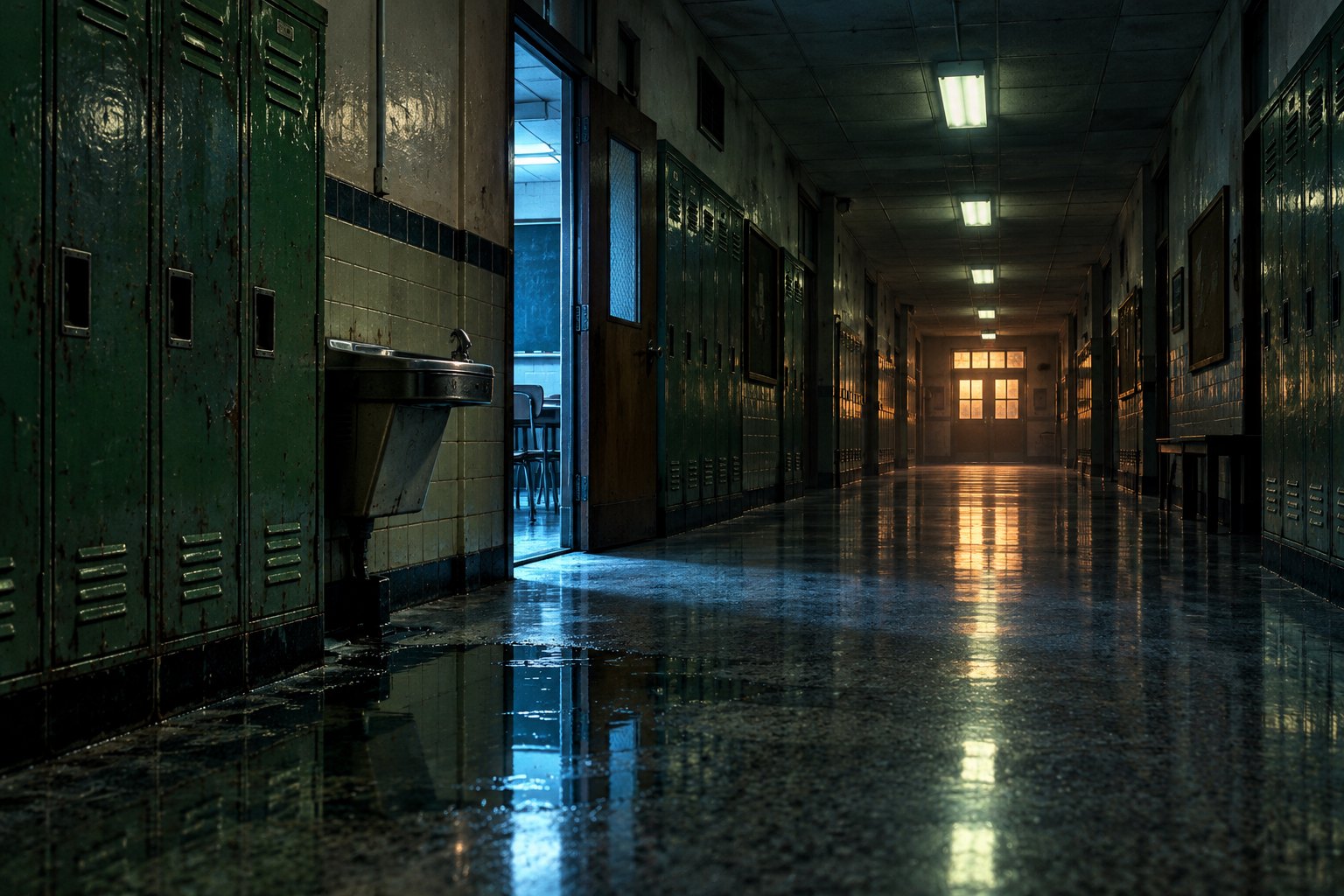
As alien parasites spread through teachers and students, an unlikely collection of teenagers must cooperate. The premise literalizes a recognizable adolescent suspicion: the adults running the institution might want obedience more than individuality.
The character dynamic gives that familiar setup its pleasure. School assigns students recognizable positions—outsider, athlete, leader—and the emergency makes those positions inadequate. People who would normally dismiss one another need information and skills that their social hierarchy has taught them to overlook.
I find its ensemble energy more inviting than the merciless pressure of Chain Saw. The school setting also turns routine objects and spaces into sources of suspicion. For another approach to reading such details, our essay on what movie objects reveal about character explores how familiar things acquire dramatic meaning.
The deeper connection: belonging becomes dangerous
These films suggest a richer account of Texas horror than empty roads and isolated buildings alone. Their characters need structures that ordinarily make life possible: family, neighbors, public authority, education. Horror emerges when those structures cannot protect them—or demand submission as the price of belonging.
Sally's escape remains the most powerful expression of that idea. She survives a household that has made cruelty a shared routine, but reaching the road cannot undo what she has experienced. The landscape opens again. Her sense of the world does not simply return to its former shape. That unresolved distance between getting away and feeling safe is what gives Texas's greatest horror classic its enduring sting.
Original content by this site's editorial team. Published: October 31, 2026 at 05:28:18 PDT (Los Angeles time)