Richard Brody’s first-week New York Film Festival discoveries include Mani Haghighi’s I Deserve a Lover Whose Every Rise Sets Fiery Dooms Raging Across the Skies, Arthur Harari’s The Unknown, and Hong Sangsoo’s Nowhere to Lay My Eyes. His coverage draws on advance screenings, making it an early critical selection rather than a verdict on the entire festival. [Brody’s festival coverage](https://www.newyorker.com/culture/the-front-row/the-new-york-film-festival-week-one-better-late-than-never)
These three films offer an intriguing route through the program. A collection of discarded objects, a photographer’s impossible transformation, and a filmmaker’s difficult family visit all raise a related question: how much control do people have over the stories that define them?
Premise and character spoilers follow. This comparative analysis draws on published accounts and festival descriptions; its interpretations are distinct from Brody’s judgments and do not constitute a firsthand screening review.
Haghighi’s Collectors: Making Ordinary Lives Harder to Erase
Haghighi’s documentary centers on Nasser Bakhshi and his partner, Roghayeh Najdi. In Tabriz, Bakhshi preserves found objects and unofficial historical documents in an extensive archive. Najdi’s paintings bring a further perspective, including attention to women’s position in Iranian society. Film at Lincoln Center describes collecting, cataloging, and preservation as central activities within the film. [The festival’s documentary description](https://www.filmlinc.org/nyff2026/films/i-deserve-a-lover-whose-every/)
Brody records the couple’s shared self-description as “artist, archivist, collector.” Those three nouns provide a useful way into their work. An artist transforms material; an archivist protects its continuity; a collector decides that something deserves keeping. Together, the roles make preservation an active practice involving taste, judgment, and responsibility.
Viewed from the collectors’ perspective, the emotional stakes begin before an object enters a museum. Someone has to notice it. Someone has to resist the conclusion that an unfamiliar face or an obsolete household possession has exhausted its usefulness. A stranger’s belongings can outlive the explanations that once made them meaningful.
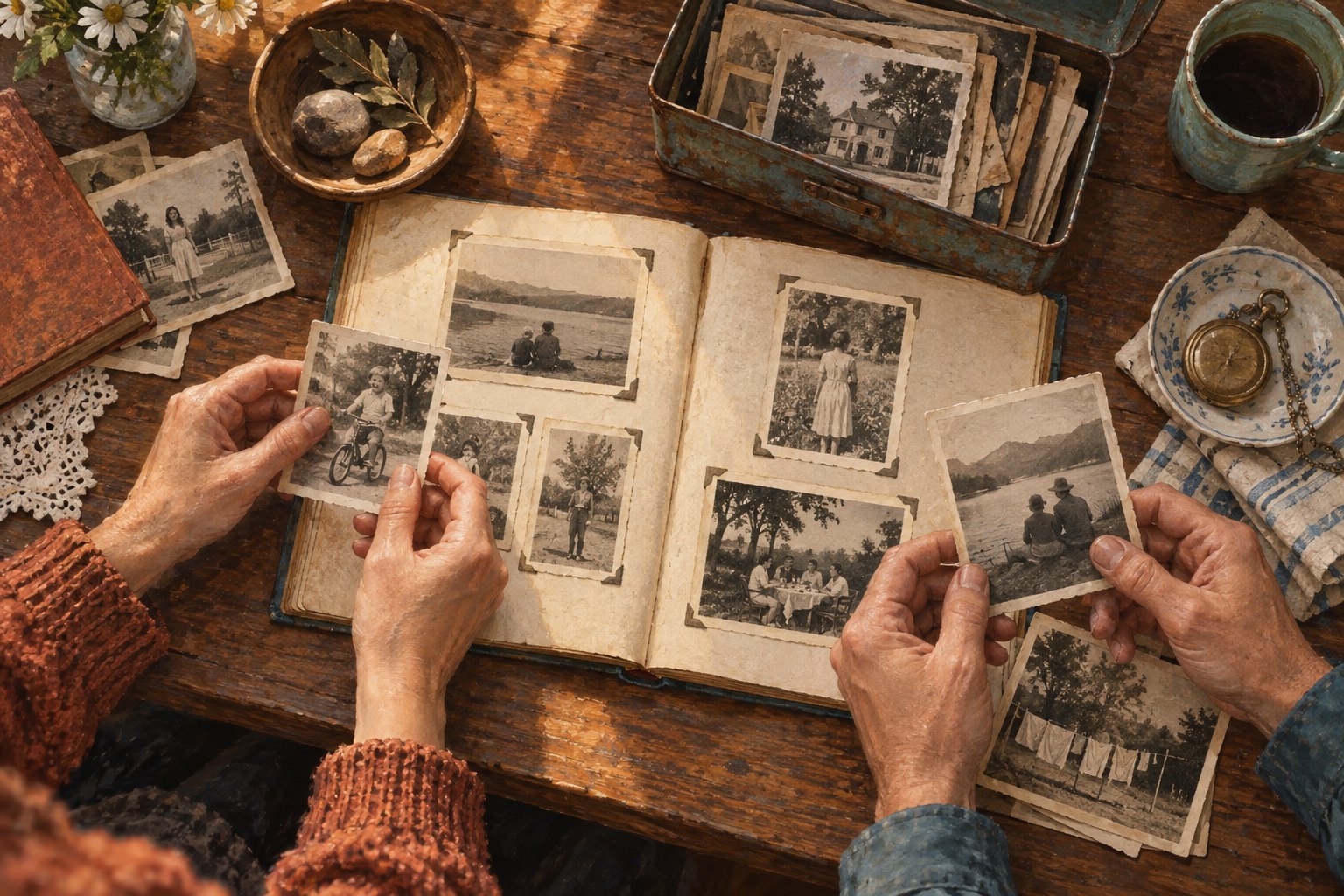
My reading is that this premise makes care inseparable from uncertainty. Preserving a photograph cannot restore everything about the person pictured. Yet throwing it away closes off the possibility of further understanding. Collecting can therefore express humility: a willingness to protect something whose full importance remains unknown.
There is also a productive tension here. Every collection reflects somebody’s preferences. The strongest question to bring to this documentary is how its subjects acknowledge the distance between saving another person’s traces and claiming to understand that person completely. Readers interested in the recovery of overlooked lives may also appreciate our character-centered discussion of queer history in La Bola Negra.
The Unknown: When Recognition Stops Working
Harari’s The Unknown approaches identity through a radically different predicament. David, a photographer, encounters a woman at a party and subsequently wakes inside her body. The Singapore International Film Festival’s synopsis describes the ensuing search for her identity and the difficulty of occupying a life that is not his own. Léa Seydoux and Niels Schneider lead the cast. [The festival’s synopsis and credits](https://sgiff.com/film/the-unknown/)
David’s occupation makes the premise especially suggestive. Photography gives him a position outside what he observes. His transformation removes that comfortable separation: appearance becomes something he must experience from within, while other people see a person he does not recognize as himself.
From his perspective, the immediate problem is practical. How does he explain himself? What evidence could make his account believable? Memory may feel conclusive to the person possessing it, but another person cannot inspect memory as easily as a face. The premise turns the familiar desire to be understood into a problem without an obvious proof.
My interpretation is that the most revealing tension lies between self-knowledge and social recognition. We often imagine identity as private property, something securely contained within us. Yet daily life depends on other people accepting our names, histories, relationships, and intentions. David’s predicament exposes that dependence.
This also establishes a demanding standard for the film’s characterization. The woman whose body he occupies must matter beyond the disruption she represents to him. A story about the instability of identity becomes more interesting when it allows every affected person an interior life. That is the question I would carry into a screening, rather than treating the transformation solely as a mystery requiring a mechanical explanation.
Nowhere to Lay My Eyes: A Daughter Beyond the Family’s Definition
Hong’s film places that struggle for recognition inside a family. Sanghee, played by Kim Min-hee, travels from Seoul to Jeju Island with her brother to visit their mother. She meets her mother’s new husband, a documentary filmmaker, and his daughter, with whom she finds an uncertain artistic connection. The festival describes a conflict involving creative practice and the responsibilities of caring for parents. [Film at Lincoln Center’s character overview](https://www.filmlinc.org/nyff2026/films/nowhere-to-lay-my-eyes/)
The situation gives both generations understandable needs. Sanghee needs room to remain an artist and an adult with a separate life. Her mother wants her daughter to be more present. Neither desire automatically settles what either woman owes the other.
Brody’s account identifies a particularly loaded word applied to Sanghee’s filmmaking: “hobby.” It is brief enough to pass as an ordinary description, yet it establishes a hierarchy of seriousness. Work that earns money becomes easier to defend; work that gives a life meaning may have to justify its existence.
That distinction matters from Sanghee’s perspective. Being permitted to make films in spare time is different from having the time and attention they require respected. Family advice can sound generous while quietly deciding which part of someone’s life is expendable.
There is a complication in Sanghee herself. Josh Slater-Williams’s account in Sight and Sound describes an initial disparity between her inward judgments of her stepsister and their developing warmth. That detail prevents the artist from occupying an uncomplicated position of moral superiority. She, too, can reduce another person to a role before learning to see more. [Sight and Sound’s account of the relationship](https://www.bfi.org.uk/sight-and-sound/reviews/nowhere-lay-my-eyes-hong-sang-soos-meditative-family-drama-familiar-all-right-ways)
For me, this is the richest interpretive possibility among these three premises: someone who wants her complexity acknowledged must practice acknowledging it in others. It is also why character should remain central even when a celebrated director attracts the attention, a concern explored in our commentary on Mike Leigh, legacy, and Tender Loving Care.
The Connection: Being Seen Without Being Simplified
These films suggest three distinct viewing priorities. Approach Haghighi through the relationship between an object and the absent person behind it. Approach Harari through the gap between private experience and public recognition. Approach Hong through the changing distance between what family members say and what they allow one another to become.
The deeper connection is a limit on possession. An archive cannot contain a whole life. A visible body cannot tell an observer everything about its occupant. A family history cannot permanently define an adult child. Each premise makes room for something that escapes the category assigned to it.
That is a compelling reason to explore these selections beyond their festival credentials. Their shared promise is the possibility of encountering people whose meanings remain unfinished—and learning to give those people more attention before deciding who they are.
Original content by this site's editorial team. Published: September 27, 2026 at 08:20:57 PDT (Los Angeles time)