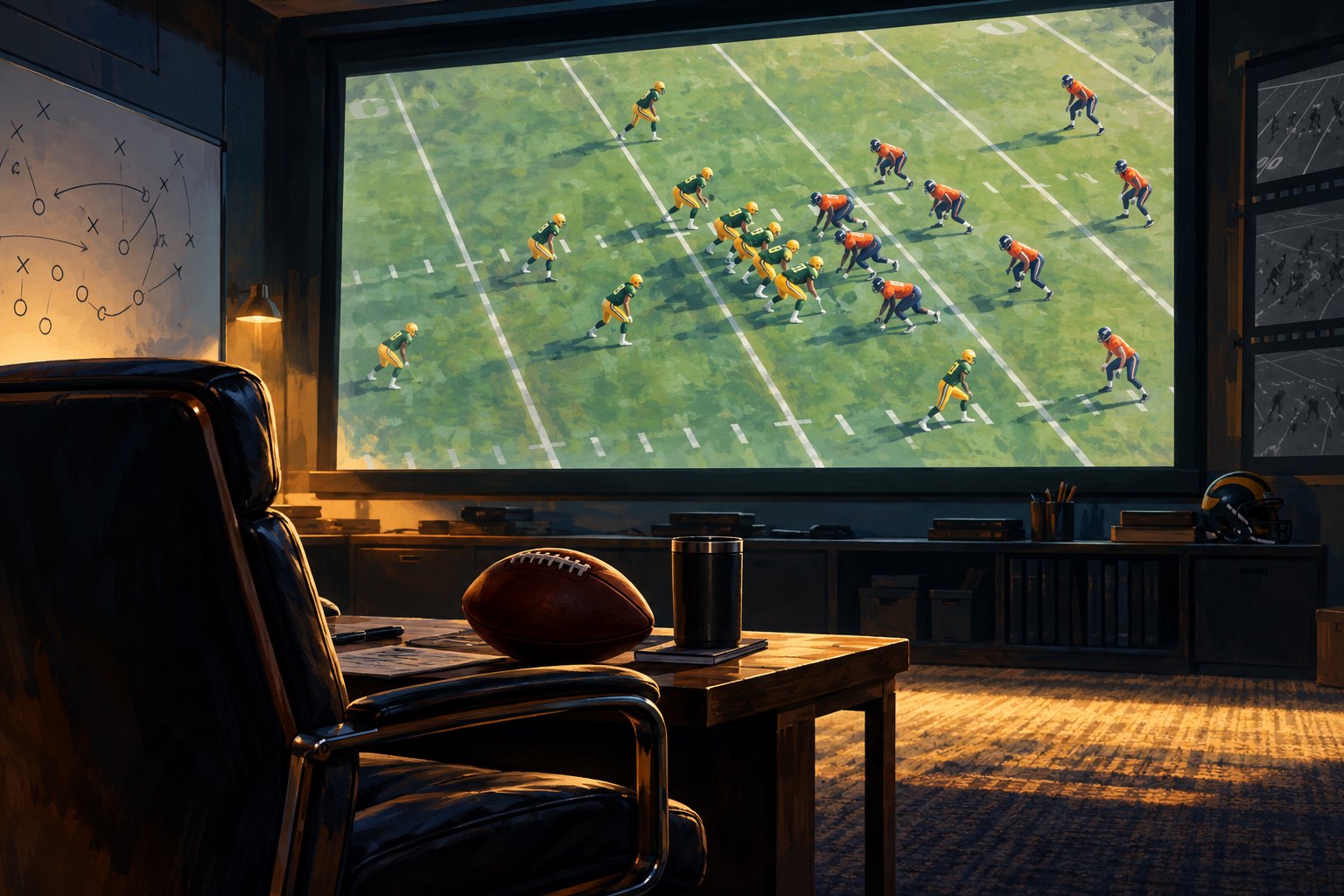
Oregon Ducks football, the Illinois Illini, and the 2026 matchup are the subjects of Addicted To Quack’s Duck Tape film review. Here, “film review” means studying football footage. Readers looking for a movie with a cast, a screenplay, and memorable dialogue are encountering a different kind of screen analysis—one concerned with how players move, what they can see, and how their decisions interact.
That distinction gives movie-minded viewers a useful way into the subject. Close viewing matters in both settings, but the standards differ. A filmmaker can deliberately arrange a scene to reveal a character’s intentions. Game footage records an event whose participants’ instructions and intentions may remain partly hidden. This is a viewing companion to the Oregon–Illinois topic, not a play-by-play recap or a verdict on footage examined firsthand.
Start with the action before accepting the story
A football game readily becomes a narrative about composure, resilience, or failure. Those descriptions can feel convincing because viewers already know where a sequence ends. A stopped runner appears to have chosen badly; a completed pass appears to validate every decision preceding it. Neither conclusion necessarily follows from the outcome alone.
When approaching the Oregon–Illinois review, separate three questions: What is visible? What might explain it? How strongly does the evidence support that explanation? A defender moving toward the line is an observation. A claim about the assignment that prompted the movement is an interpretation. A claim about the player’s confidence goes further still.
This distinction also makes movie criticism more useful. Our discussion of reading film criticism with closer attention to evidence considers the relationship between description and judgment. Football analysis adds a practical constraint: the camera may never show everything needed to settle the argument.
Follow a player’s options, not an invented inner monologue
The quarterback: judge the available moment
A productive quarterback-focused viewing begins before the throw. Watch the initial alignment, then the space around the passer as the play develops. Ask when a possible target becomes available and whether the quarterback still has room to deliver the ball at that moment. An opening visible in a paused replay may have existed too briefly to be a realistic option.
For Oregon–Illinois, these are questions to bring to the analysis, not conclusions about a particular snap. Avoid supplying thoughts the footage cannot establish. A head turn can be observed; the exact progression a quarterback was instructed to follow usually requires additional evidence. Even a clear view of the action does not automatically reveal the play call.
The blocker: look beyond the collision
Following the ball can make blocking seem like background activity. Try watching one offensive lineman instead. Notice the first step, the direction of contact, and the space that remains afterward. The most informative moment may occur before the runner reaches the line or before the passer begins the throwing motion.
Be cautious about assigning responsibility from proximity. The player nearest a defender is not necessarily the player responsible for that defender. Without knowing the protection or blocking assignment, a viewer can describe the visible interaction more confidently than explain every reason it occurred.
The defender: account for competing threats
A defender often has to respond to more than one possible development. Watch how the player’s position changes as the offense reveals information. Does the defender move toward the ball, preserve outside space, or remain near a potential receiver? The value of the movement depends on the surrounding action.
This perspective keeps both Oregon and Illinois present as active participants. A favorable offensive result might reflect execution, a defensive decision, an individual mismatch, or several factors together. Treating every outcome as one team’s achievement or mistake erases half the contest.
The camera determines which explanations are possible
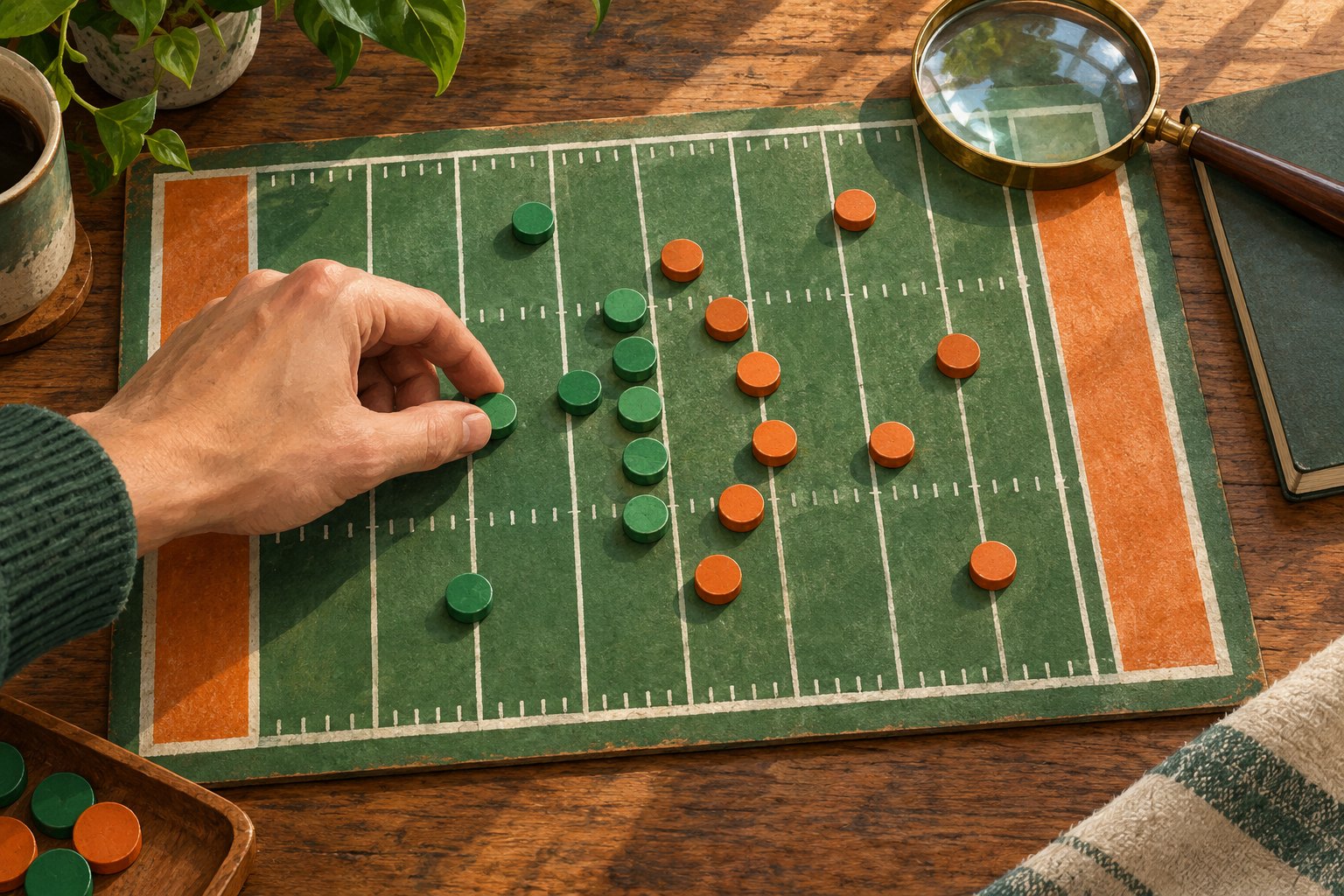
In a movie, framing directs attention. Football footage does the same, whether or not it serves the needs of analysis. A close view can make contact easy to inspect while hiding the receivers. A wider view can clarify spacing while making a small hand movement difficult to judge. Each angle offers evidence and leaves something out.
Before accepting a confident explanation, check whether the relevant action is actually visible. If a receiver leaves the frame, the image cannot establish the entire route. If several bodies obscure a collision, the result may be clear while the mechanism remains uncertain. Replaying an incomplete view does not make it complete.
There is a related question in our commentary on how a screen presentation preserves a live performance: what does the recording allow an audience to experience? For football study, that question becomes particularly concrete. The view must support the claim being made about the play.
A practical three-pass approach to Oregon–Illinois footage
- Watch once at normal speed. Follow the overall action and notice how quickly decisions become necessary. Resist pausing immediately to assign blame.
- Watch again for one relationship. Follow a blocker and defender, a receiver and coverage player, or the quarterback and nearby pressure. Keep the question narrow enough to answer from the image.
- Return to the full sequence. Test whether the detail explains the result or merely accompanies it. Record what remains outside the frame or otherwise uncertain.
Keep observation and interpretation separate in your notes. A description of movement belongs in one category; a proposed explanation belongs in another. This simple habit makes it easier to revise a judgment when a different angle or another play complicates the initial reading.
Comparison matters, too. One clip can illustrate a possibility. Establishing a recurring problem requires multiple relevant examples and attention to the circumstances surrounding them. Similar-looking plays may involve different personnel, field positions, or demands. Repetition is useful only when the comparison is meaningful.
What a worthwhile film review should leave behind
My standard for an Oregon–Illinois breakdown is whether it improves the viewer’s ability to explain an action with appropriate confidence. Strong analysis should make an overlooked contribution visible, connect movement to consequence, and identify the point where evidence ends. Its value exceeds the satisfaction of hearing an existing opinion repeated.
The deeper connection to film criticism is attention. Rewatching can displace the apparent main character—the person holding the ball—and reveal how much depends on someone at the edge of the image. It can also expose how quickly audiences turn an outcome into a story about personality.
That is the most useful perspective to bring to Duck Tape’s Oregon–Illinois subject: curiosity about decisions under constraint. Watch what each player could plausibly respond to, consider what the frame excludes, and let the explanation remain open to revision. The reward is a more precise understanding of collective performance, built from visible actions rather than invented motives.
Original content by this site's editorial team. Published: October 27, 2026 at 09:22:49 PDT (Los Angeles time)