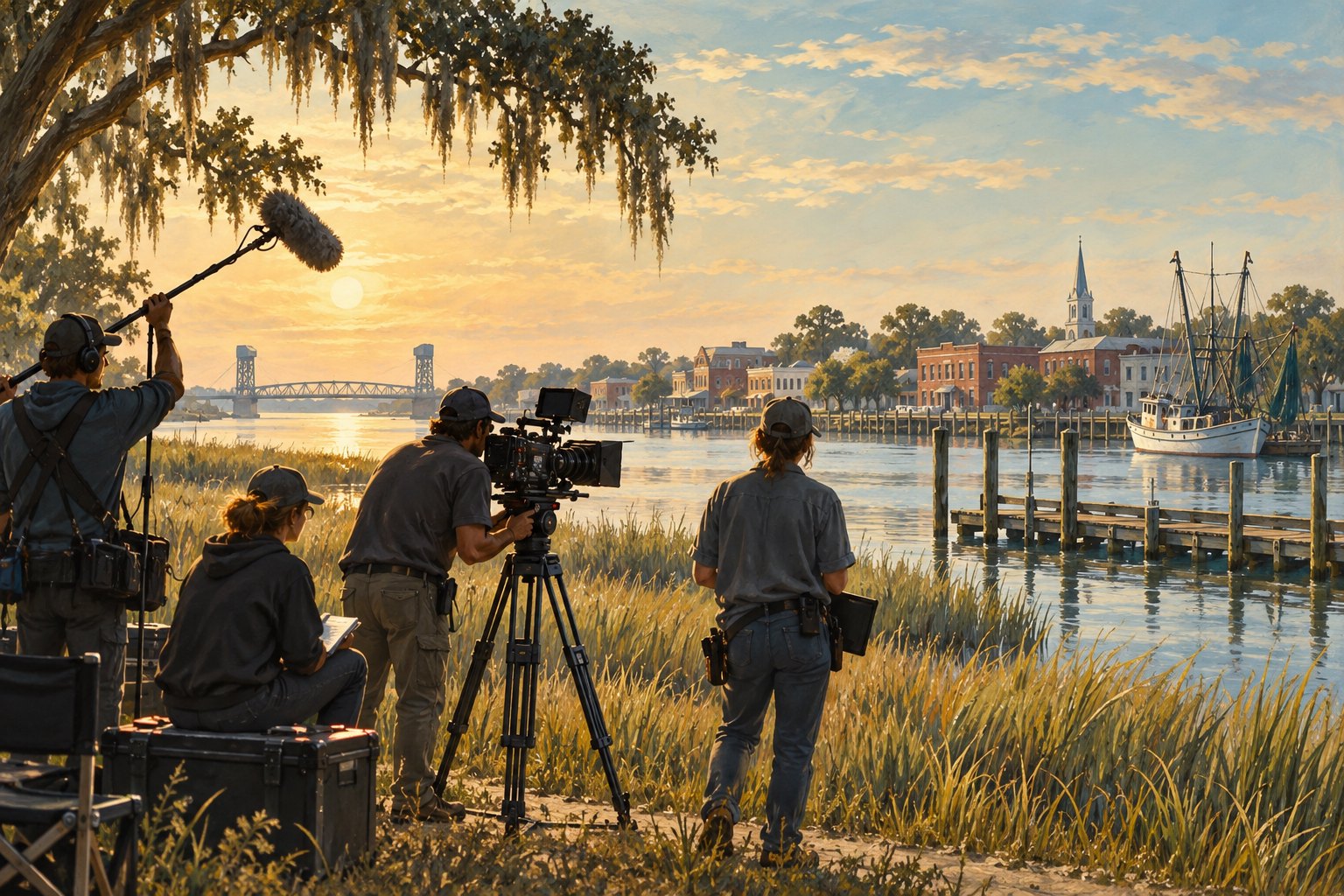
North Carolina’s film industry has a new funding development with a distinctly regional focus. According to Port City Daily, local legislators have secured a one-time $31 million infusion for film, with priority for productions shooting in southeastern North Carolina. The central questions are what that temporary boost can accomplish and how the geographic preference will shape access to it.
For moviegoers, the connection may seem distant: public funding announcements rarely explain whether the eventual films will be worth watching. Yet decisions about where productions can work help shape the circumstances in which movies get made. Our view is that this announcement deserves attention for the opportunities it could create, while its lasting value will depend on decisions and results beyond the headline amount.
What the funding announcement establishes
Three elements define the reported development: local legislators secured the funding boost, the amount is $31 million, and the infusion is a one-time measure that prioritizes southeastern North Carolina productions. Together, those elements describe a targeted intervention rather than an open-ended promise of support.
The announcement should not be read as a list of funded movies. The amount alone cannot establish which productions will receive assistance, how many projects will benefit, when individual shoots will begin, or what audiences will eventually see. Similarly, priority for a region does not, by itself, explain whether productions elsewhere are excluded or how competing applications will be evaluated.
Those distinctions matter because film announcements move through several stages. Securing support, selecting recipients, shooting a project, completing it, and reaching an audience are separate milestones. A useful assessment follows that progression instead of treating the first step as proof that every subsequent one is assured.
Why the one-time structure matters
A temporary infusion can address a near-term need without establishing a dependable future. For an individual production, assistance at the right moment could help make a location workable. For someone deciding whether to build a career or business around regional filmmaking, the relevant horizon is longer.
Consider the difference between hiring equipment for a single shoot and investing in equipment intended to serve several years of productions. The first decision can respond to one confirmed project. The second requires some confidence about what comes afterward. That is a practical reason to evaluate immediate activity and lasting capacity separately.
This does not make one-time funding unimportant. A limited measure should be judged against a clear, achievable purpose. The stronger question is whether the work it enables leaves useful experience, professional relationships, and opportunities for another production to build upon.
Our commentary on what production uncertainty means for filmmaking and its workers explores the broader stakes. Here, the distinctive issue is whether a temporary regional boost can help people plan beyond their next assignment.
Filming in a region and telling its stories
The southeastern North Carolina preference also raises an artistic question: what relationship will the supported productions have with the places where they shoot?
A location can serve several purposes. It might portray itself, stand in for somewhere else, or provide an environment that the camera transforms beyond recognition. None of those choices automatically determines artistic quality. A compelling film can disguise its surroundings; a weak one can name every street correctly.
From a character-centered perspective, place becomes especially meaningful when it influences behavior. The revealing details are often ordinary: how far someone must travel to work, whether a room offers privacy, who feels comfortable entering a particular space, and what leaving home would actually cost. These details can make a character’s choices feel grounded without turning the setting into a sightseeing itinerary.

When films associated with this funding eventually become available, one useful critical test will be whether their environments shape the drama. Does a setting change what the protagonist can do? Does the framing reveal relationships through distance, access, or confinement? Does the world seem inhabited beyond the needs of the central plot?
These are questions for the finished work, not qualities that funding can guarantee. The announcement creates a reason to watch what develops; it cannot substitute for watching the movies themselves.
Regional priority needs a clear definition
Giving southeastern productions priority makes geography a central part of the funding story. To evaluate that choice fairly, readers need to know what counts as a meaningful connection to the region.
Potential measures could include where filming occurs, how much work takes place locally, or the extent of local hiring and purchasing. These are possible evaluation criteria, not confirmed conditions of this infusion. Each would describe a different kind of regional benefit, and none should be assumed simply because a production uses a recognizable location.
There is also an important distinction between attracting outside projects and expanding opportunities for filmmakers already rooted in an area. Both can be worthwhile. A region might gain substantial production work without gaining much influence over which stories are developed or who gets to direct them.
Our editorial preference is for an assessment broad enough to notice both outcomes. Visiting productions and locally initiated films need not be competitors in a cultural argument, but their contributions should be described accurately. A production address alone tells readers very little about creative ownership.
What readers should watch for next
The most useful follow-up coverage would connect the funding announcement to specific, verifiable outcomes. Four questions offer a practical starting point:
- How is priority applied? Look for a clear explanation of the geographic boundaries and selection process.
- Which projects receive support? Distinguish confirmed recipients from productions merely expressing interest in the region.
- What work actually happens? Separate projected activity from completed filming, documented hiring, and other reported results.
- What remains afterward? Look for evidence of further employment, repeat production activity, or opportunities that outlast an individual shoot.
These questions also help keep financial and artistic judgments precise. A film can provide worthwhile local employment and disappoint creatively. Another can be excellent without establishing that the funding arrangement achieved all its economic aims.
Our examination of what audiences might gain from public film support considers that distinction at a different scale. For this North Carolina development, the assessment should remain tied to the particular money, regional priority, and outcomes at issue.
The lasting opportunity is in what follows
The reported $31 million infusion gives southeastern North Carolina productions a tangible reason for attention. Its one-time nature also makes the next decisions consequential: temporary support has a limited window in which to become useful work.
The most promising outcome, in our judgment, would be more than a collection of recognizable backdrops. It would be filmmaking that creates room for skilled work and distinctive choices, whether the region appears openly on screen or quietly supplies the conditions for a convincing fictional world.
For now, the funding announcement is the development to assess. Later will come the harder, more interesting tests: what was made, who had the opportunity to make it, and whether those films give audiences characters and places worth remembering.
Original content by this site's editorial team. Published: October 6, 2026 at 16:22:16 PDT (Los Angeles time)