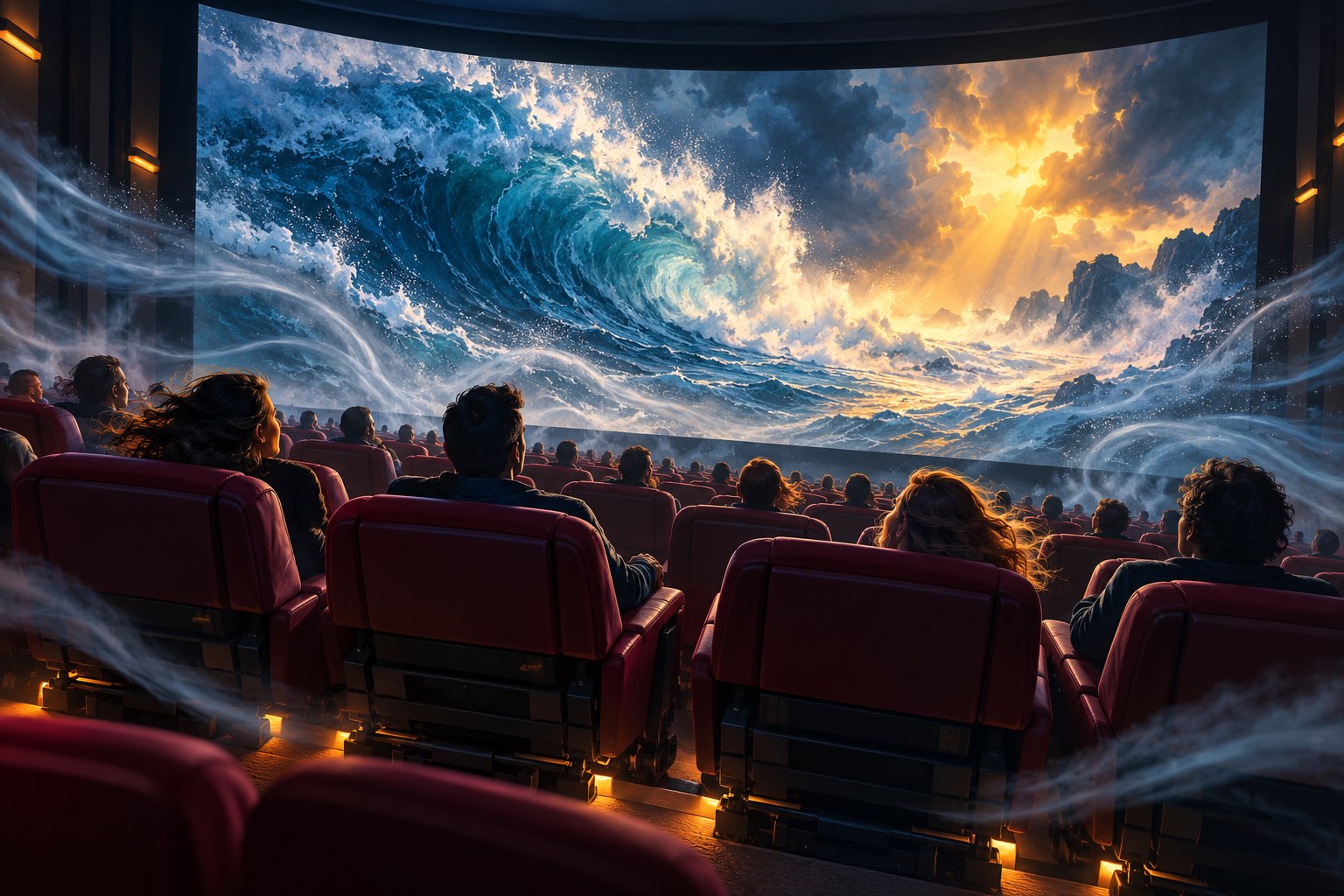
4DX movie theaters turn watching a film into a more physical experience, combining the screen presentation with moving seats and sensory effects. The appeal is easy to understand: an action sequence can become something you respond to with your body as well as your eyes. The harder question is whether that added sensation makes the movie more involving—or simply makes the screening more eventful.
CBS News has put the format in focus with a report exploring the experience inside 4DX theaters. That subject deserves attention beyond the novelty. For anyone choosing a movie ticket, the useful distinction is between enjoying the attraction and connecting with the film. Sometimes those pleasures reinforce each other. Sometimes they compete.
This is spoiler-free commentary on the exhibition format, rather than a review of a particular film or a firsthand assessment of the auditorium featured in the report.
What changes when the auditorium joins the action?
In a conventional screening, filmmakers direct attention through framing, editing, performance, and sound. A close-up asks us to study a face. A cut changes what we know. A sound from somewhere outside the frame can make an empty doorway feel threatening. These choices already give cinema a powerful physical presence.
4DX adds another channel of sensation. Its defining proposition is that movement and environmental effects can accompany what appears on screen. The exact experience should be checked for the screening you are considering; a format name alone does not tell you how every moment will feel.
From a critical perspective, the interesting issue is emphasis. An added physical cue can direct attention toward speed, impact, or instability. That may suit a scene beautifully. It can also compete with a small gesture that explains why the action matters. More stimulation gives the presentation another expressive tool, and another opportunity to pull focus.
The character test: whose experience are we sharing?
My strongest test for immersive presentation is whether it supports a character’s perspective. Imagine a hypothetical sequence in which someone struggles to keep control of a vehicle. Physical movement could help communicate uncertainty: the audience briefly shares the sensation of being carried somewhere against its wishes. The effect has a dramatic purpose because it connects to the person’s predicament.
Now imagine the same kind of movement accompanying a distant shot of destruction while the central character stands still, processing a loss. The spectacle might become more exciting, but excitement may be the wrong response for that moment. An effect can match the visible event while working against its emotional meaning.
These are illustrative scenarios, not descriptions of scenes in the CBS report or any specific 4DX release. They establish a useful question: does the physical experience help us understand what someone is enduring, or does it mainly celebrate what is happening around them?
The same concern underlies our discussion of why Street Fighter’s rivalries need emotional stakes. Action gains meaning when we understand what a character wants, what stands in the way, and what failure would cost. Exhibition technology can emphasize those stakes; the screenplay and performances still have to establish them.
Suspense needs room to build
Intensity is only one part of a satisfying action scene. Anticipation, orientation, and release matter just as much. We need enough information to understand the danger, enough uncertainty to worry about the outcome, and enough contrast to recognize when the pressure changes.
For that reason, I would judge an immersive presentation partly by its restraint. A quiet stretch can make the next sensation meaningful. If every event demands a strong physical response, the audience may start anticipating the next effect instead of following the next decision.
There is also a difference between surprise and suspense. A sudden stimulus can provoke an immediate reaction. Suspense asks us to carry knowledge forward: someone has overlooked a threat, made a dangerous promise, or trusted the wrong person. The most persuasive use of added sensation would preserve that longer emotional thread.
Our viewer’s guide to looking closer at films offers a related approach: pay attention to how individual choices shape your understanding. During an immersive screening, that includes noticing whether the presentation helps you follow the film’s rhythm.
When a 4DX screening may suit your movie night
If your goal is an outing with an element of physical spectacle, the format has an understandable attraction. There is nothing lesser about enjoying a screening as a shared event. Laughter, surprise, and the pleasure of reacting together can be part of what makes a theater visit memorable.
My preference would be to choose by both the film and the occasion. A movie whose main appeal is movement, scale, or playful adventure offers an intuitive reason to consider the format. A performance you want to study closely may call for a setting in which you can give a face or a line of dialogue your uninterrupted attention. These are preferences, not rules about what any genre deserves.
A repeat viewing also offers a useful possibility. Once you know the story, you can pay more attention to what a different presentation adds. That makes it easier to distinguish a strong film from an enjoyable effect—and to appreciate both on their own terms.
Questions to ask before booking
- What experience does this specific ticket include? Read the screening description rather than assuming every premium presentation offers the same features.
- Does the physical component appeal to everyone attending? A shared enthusiasm for the movie does not automatically mean a shared preference for moving seats or sensory effects.
- What guidance does the theater provide? Check its current admission requirements, accessibility information, and instructions for using the seats before purchasing.
- What are you paying for? Compare the actual ticket options and decide whether the added attraction matters to this particular outing.
- What do you want to notice? Choose a presentation that supports your interest in the film, whether that is spectacle, performance, atmosphere, or a combination.
A more physical experience still needs an emotional center
The deeper question raised by 4DX is what we mean when we say a movie feels immersive. Physical sensation can make the room seem connected to the screen. Emotional involvement makes another person’s choices feel consequential. Those experiences can overlap, but neither guarantees the other.
My editorial standard is simple: the strongest presentation leaves me more attentive to the film. After the sensation passes, I should still understand the character’s fear, desire, or difficult choice more clearly. A memorable jolt can be a pleasure. A memorable person is what gives that pleasure somewhere to go.
That is the most promising way to think about 4DX: as another way to encounter a movie, with its value determined by the relationship between sensation and story. The worthwhile question after the credits is how much of each stayed with you.
Original content by this site's editorial team. Published: October 18, 2026 at 21:12:41 PDT (Los Angeles time)