Na Hong-jin’s Hope makes an alien invasion feel absurd before it makes it comprehensible. Its people bring familiar habits to an unfamiliar catastrophe: professional irritation, stubborn pride, neighborly concern. Those habits give the spectacle its comic friction. My reading is that the film’s humor supplies an essential part of its horror: people keep behaving as though the world still operates on terms they recognize.
Justin Chang’s NPR review identifies the collision between ambitious filmmaking and unabashed monster-movie excess as a defining feature. Looking closely at the comedy offers another way into that collision. The ridiculous behavior is often where the characters become most legible. [Justin Chang’s NPR review](https://www.kpbs.org/news/arts-culture/2026/09/18/theres-hope-for-this-divisive-alien-invasion-film-that-mixes-art-and-schlock)
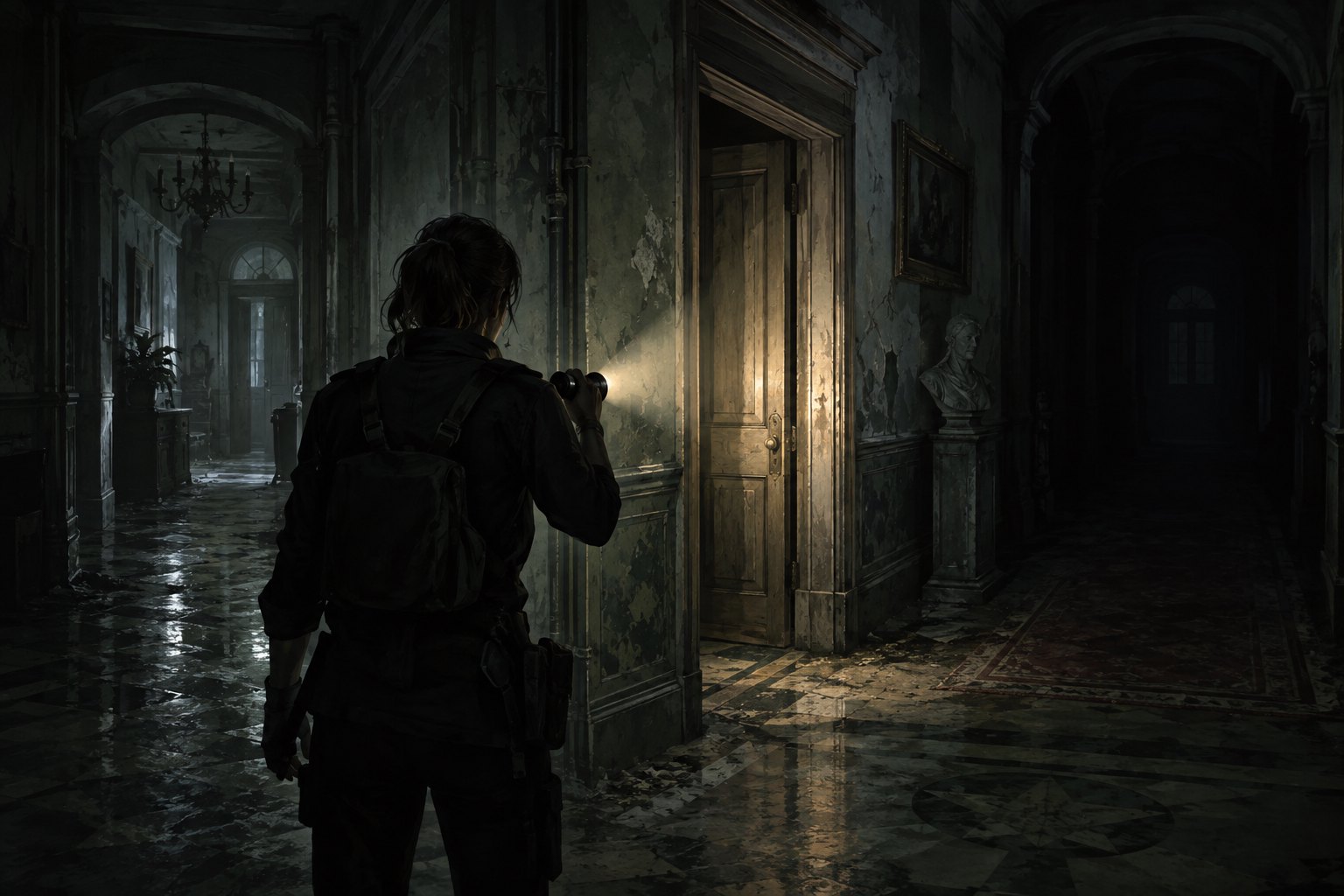
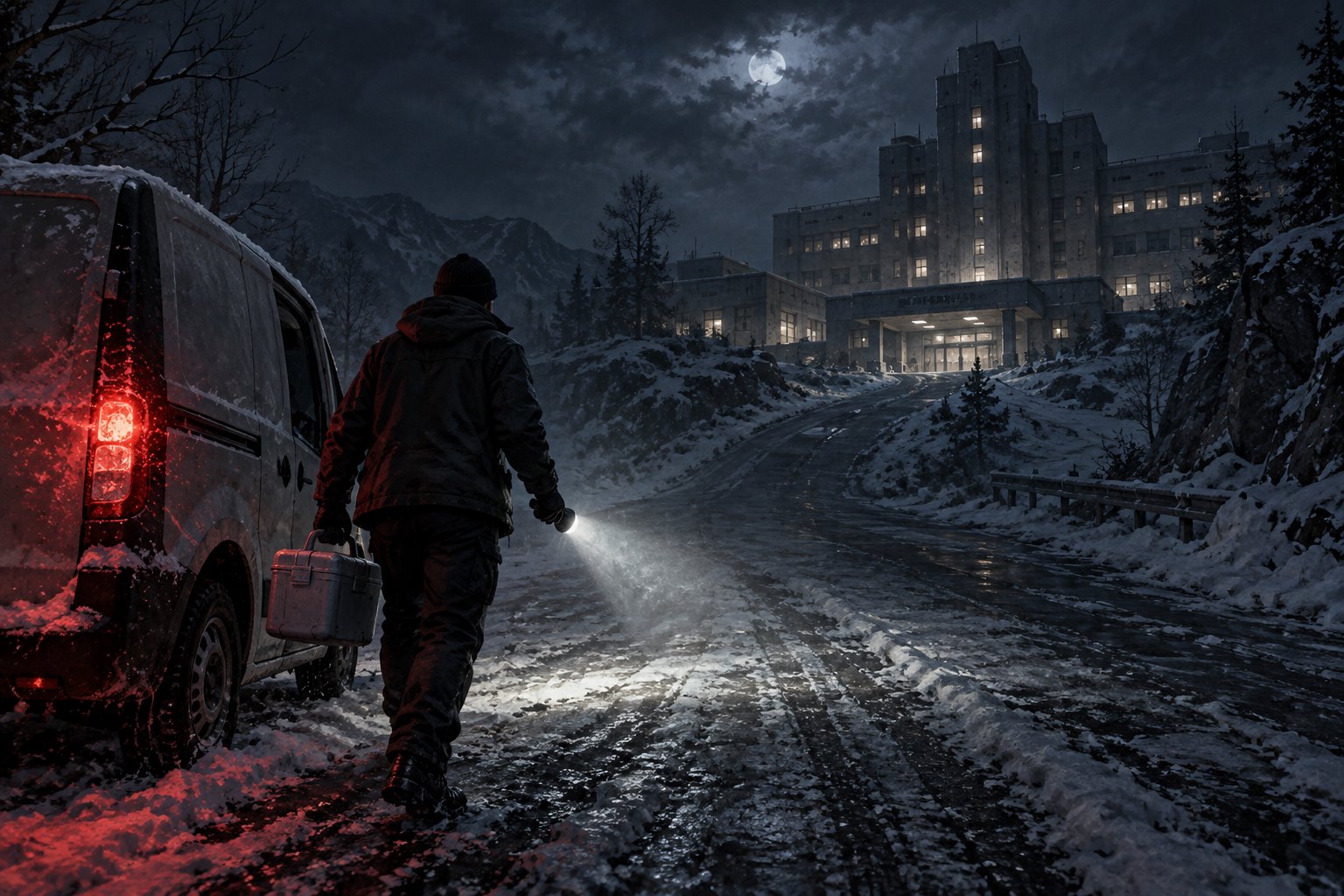
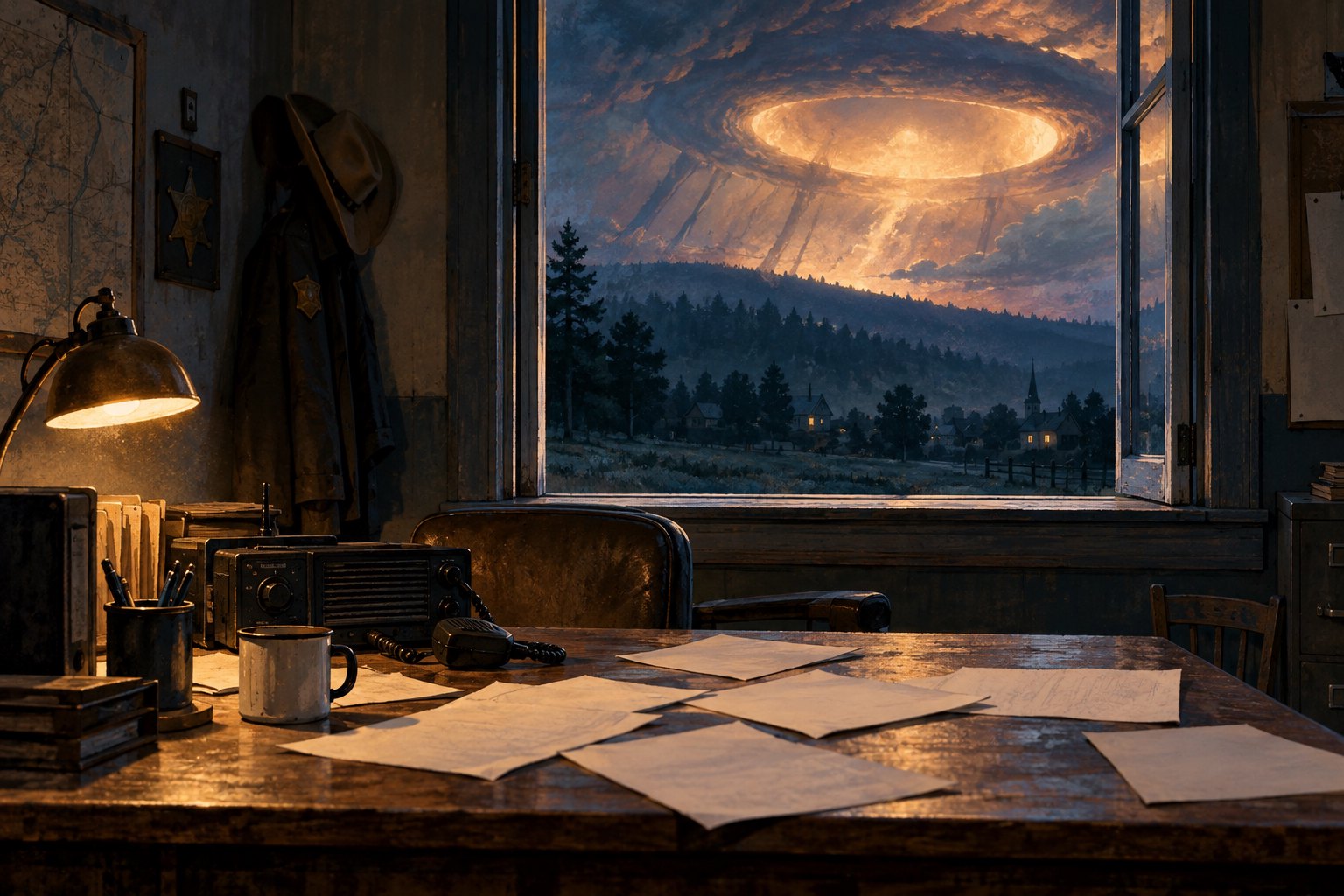
Spoiler warning: This critical analysis discusses character moments, action sequences, and the ending’s change in perspective. The illustrations are conceptual artwork, not film stills.
A police chief whose ordinary authority no longer helps
Hwang Jung-min’s police chief, Bum-seok, initially faces a problem that might still fit into an ordinary working day: a mutilated animal and armed hunters. His irritation about unregistered firearms belongs to a recognizable system of rules. Then the scale of the emergency outruns that system.
“Where did all these guns come from?” is a particularly revealing line, recorded in John Bleasdale’s review for Sight and Sound. It expresses practical alarm, but it also punctures the fantasy of a police chief who knows everything happening in his jurisdiction. [Sight and Sound’s review](https://www.bfi.org.uk/sight-and-sound/reviews/hope-big-bold-south-korean-creature-feature)
The joke works because the question remains reasonable. An invasion does not magically make an improvised arsenal safe. Yet asking about weapons amid monstrous destruction also exposes how badly the chief’s priorities have fallen behind events. He is trying to restore a manageable problem inside an unmanageable one.
That gives the comedy an uncomfortable edge. Laughing at an overwhelmed official is easy; recognizing the impulse behind his behavior is less comfortable. Most people would reach first for the procedures they already know. Authority becomes funny here because its vocabulary survives longer than its usefulness.
Hearing danger before understanding it
The chief’s delayed comprehension also shapes the suspense. Robert Daniels describes how Bum-seok follows gunfire, explosions, and screams while remaining behind the creature responsible. The audience’s access to the emergency is restricted by his position within it. [Robert Daniels’s review](https://www.rogerebert.com/reviews/hope-na-jong-hin-movie-review-2026)
My interpretation is that this arrangement makes listening an unstable form of investigation. Sound establishes urgency without reliably establishing cause. A crash tells him something has happened; it cannot tell him whether moving toward it will help. Every decision therefore carries an information deficit.
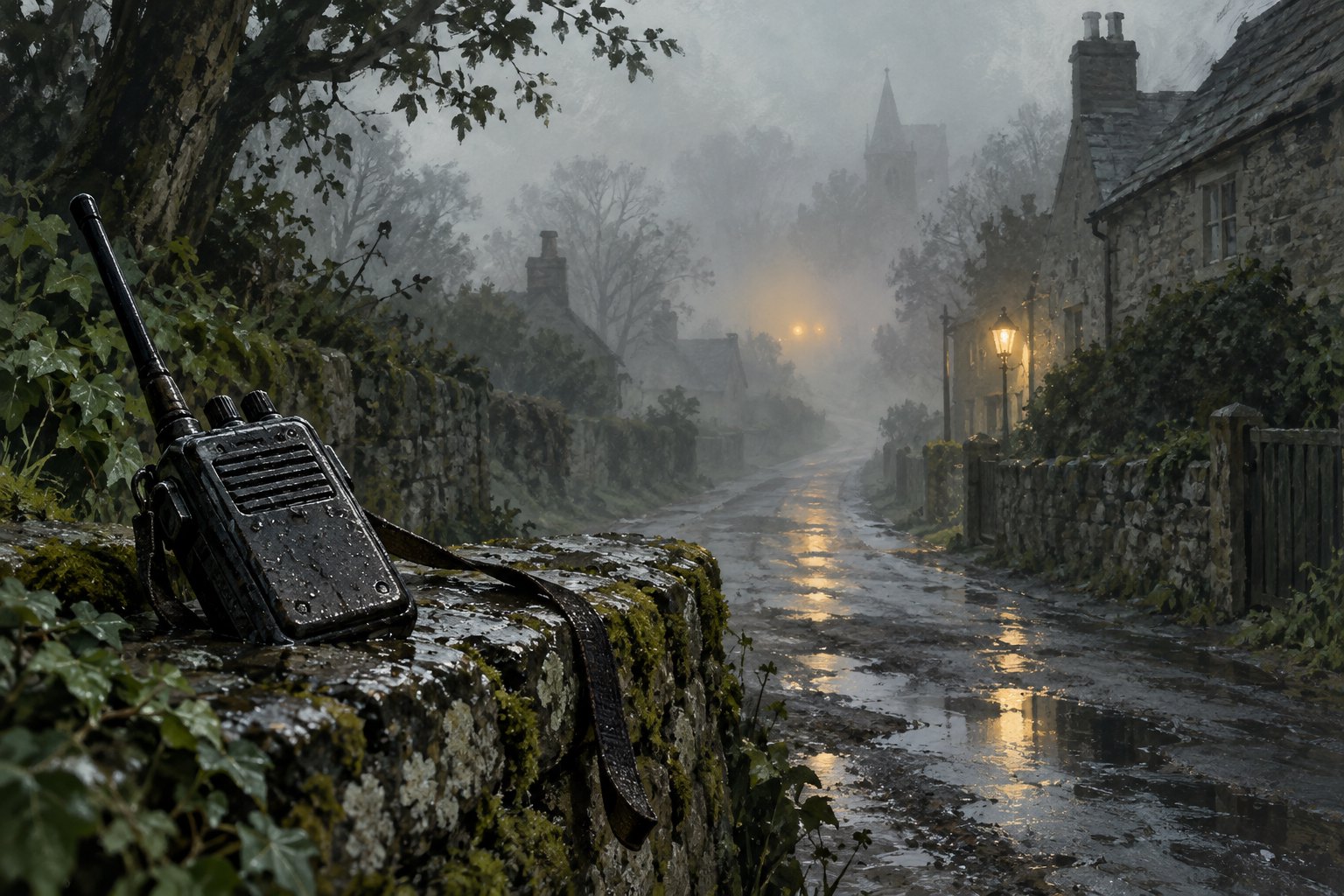
That uncertainty also creates room for comedy. A character can respond decisively and still misunderstand the situation completely. Timing becomes crucial: confidence arrives first, evidence arrives afterward, and the gap between them supplies the joke.
This connects with our discussion of how restricted perspective creates survival horror. Fear becomes more immediate when the viewer has enough information to anticipate danger but too little to organize it into a reassuring explanation.
Sung-ae makes the ridiculous worth listening to
Hoyeon’s deputy, Sung-ae, provides a different comic register. In an interview with Zachary Lee, the actor discussed the hospital scene in which she tends to the elderly Hae-sul while hearing his account of relieving himself in the woods. Her attention to his physical needs anchors an extravagantly undignified story in ordinary care. [Na Hong-jin and Hoyeon’s interview](https://www.rogerebert.com/interviews/hope-na-hong-jin-hoyeon-interview)
The useful distinction is between a scene that laughs at someone’s embarrassment and one that allows an embarrassed person to remain worthy of attention. Sung-ae’s seriousness makes the second reading possible. An elderly resident does not stop being her responsibility because his story is inconvenient, comic, or difficult to process.
For me, that is a stronger basis for attachment than a conventional speech about protecting the community. Care becomes visible through patience. A disaster film can announce that lives matter while treating almost everyone as scenery; a moment of sustained listening gives that claim something concrete to stand on.
The hunter and the joke of sudden expertise
Sung-ki, played by Zo In-sung, occupies a more exaggerated register. Another line quoted by Sight and Sound asks, “When did your cousin become so good at riding a horse?” The question draws attention to the astonishing competence an action movie can suddenly confer on a character.
It is an economical joke about how we watch these films. Spectacle encourages immediate acceptance: someone performs an extraordinary feat, so extraordinary ability becomes part of the character. The dialogue briefly interrupts that transaction. Somebody inside the story notices the improbability too.
That self-awareness can be liberating, provided it does not become an all-purpose excuse. A film earns comic exaggeration through timing and characterization. Simply acknowledging that something is unlikely cannot automatically make it exciting.
Our earlier examination of Hope’s characters and expanding spectacle approached the relationship between people and scale. Here, the sharper issue is what laughter does to belief: it briefly loosens the rules while asking us to remain invested in the consequences.
Where comic invulnerability meets real danger
Chang describes the film’s violence as moving between forceful realism and slapstick exaggeration. That movement helps explain its divisiveness. Viewers are being asked to adjust their expectations about bodily danger as the action continues.
My reservation concerns the emotional cost of that adjustment. If an impact invites a laugh, the next impact must work harder to inspire dread. Repetition can gradually teach an audience to expect survival, even when the imagery insists on peril. The filmmaking needs variation in vulnerability as much as variation in movement.
Still, tonal instability has expressive value. Panic is rarely dignified. People can be frightened, petty, capable, and ridiculous within the same minute. Allowing those qualities to coexist gives the invasion a messier emotional texture than uninterrupted solemnity would.
The deeper joke is about certainty
Na’s interview provides an important clue to the ending: he describes the human and alien conversations as moving in opposing directions, with humanity confronting its behavior while the aliens look toward a future they must continue to believe in. This makes the shift in perspective deliberate rather than merely incidental.
My reading is that the comedy prepares that reversal by repeatedly exposing incomplete knowledge. The chief does not fully understand his town. Other characters cannot quite account for sudden heroics. Familiarity makes people seem understandable long before their judgments deserve our confidence.
That is where Hope becomes most interesting as criticism of action-movie pleasure. We can enjoy competence, identify with panic, and laugh at frustration without treating those responses as proof of moral clarity. Its unruly humor keeps opening a small distance between what feels satisfying and what has actually been understood. The strongest question it leaves behind is whether recognition has made us sympathetic—or merely too quick to take a side.
Original content by this site's editorial team. Published: September 19, 2026 at 04:52:55 PDT (Los Angeles time)