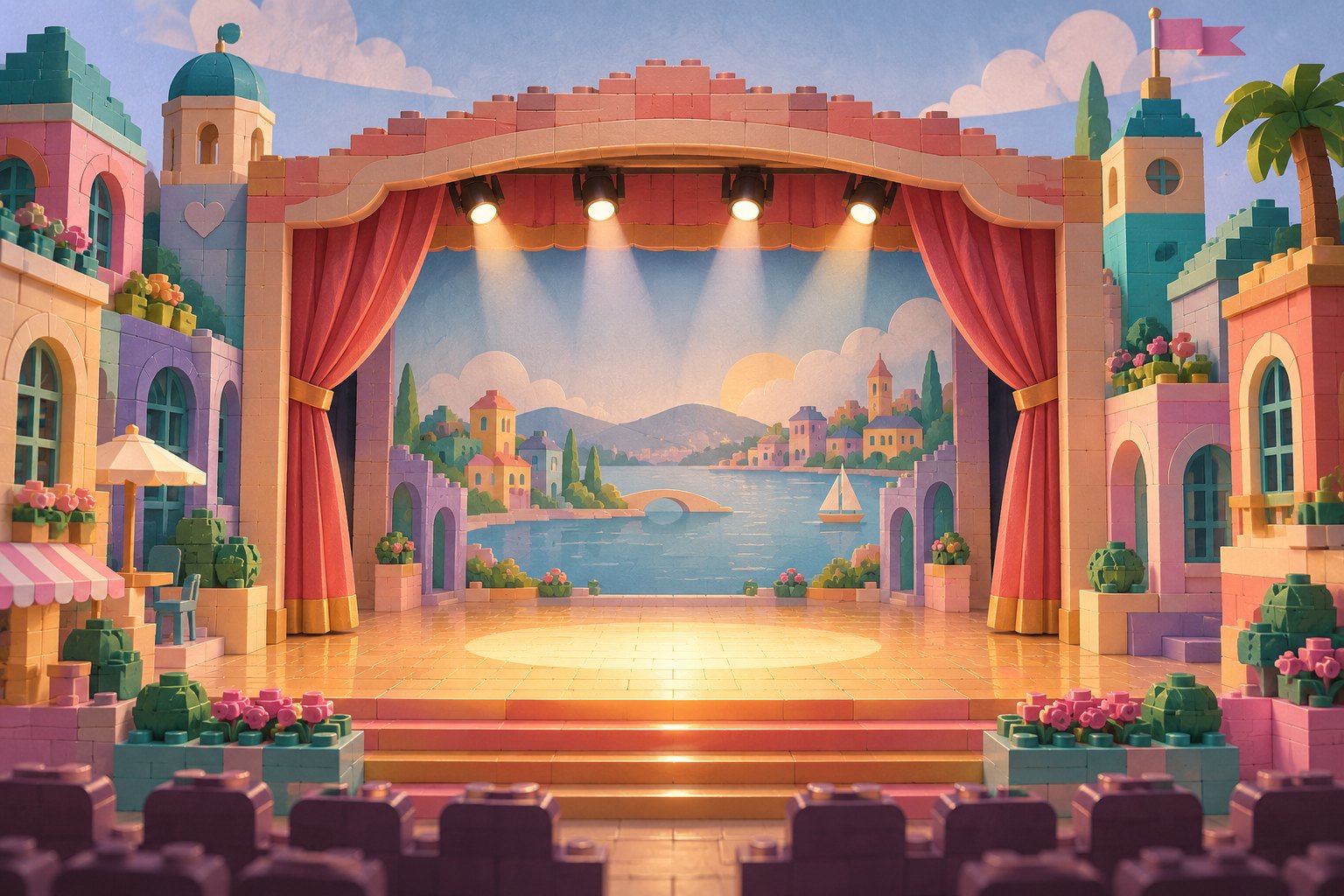
Jada Langley and Gino Ochello are among the cast unveiled for Lego’s live-action Heartlake City musical, according to Variety. The announcement gives the project a human face and raises an appealing creative question: what happens when a world associated with building and play becomes a place where actors express themselves through song?
The musical format makes that transition particularly interesting. A performer can turn a bright, inviting environment into something emotionally specific through a hesitant entrance, an impatient gesture, or a voice that changes when another person starts listening. For this project, that specificity could matter as much as the visual appeal of its setting.
This is spoiler-free casting commentary, not a review of the finished film. The announcement supports discussion of the cast and live-action musical approach; it does not provide a basis here for judging performances, quoting dialogue, or explaining an ending. The analysis below concerns the creative possibilities of that approach.
What the Heartlake City Casting Announcement Establishes
The central news is straightforward: Langley and Ochello are included in the announced cast of the project described in Variety’s coverage as Lego’s first live-action Heartlake City musical film. Their involvement is the starting point for an assessment of the adaptation, rather than evidence that its artistic choices already work.
That distinction matters because casting news often compresses several separate questions into one burst of excitement. An actor joining a film tells us who will participate. It does not tell us how much dramatic space that performer receives, whether the relationships are convincing, or whether the songs deepen the story.
For readers following Langley or Ochello, the useful next question is therefore about opportunity. What will their characters want? How will those desires come into conflict with someone else’s? Will the musical give each performer a recognizable perspective? Those answers must come from the film itself.
Human Performers Can Make a Constructed World Feel Personal
My strongest reason for interest in the live-action approach is the possibility of friction between a carefully designed world and people who cannot always arrange their feelings so neatly. Colorful surroundings can establish an atmosphere immediately. An actor can complicate that atmosphere just as quickly.
Consider a general storytelling possibility, rather than a scene from this movie: an inviting public space might feel exhilarating to one character and intimidating to another. The location stays the same, but posture, eyelines, and the distance between performers change its meaning. A setting becomes dramatically useful when it belongs to someone’s experience.
That is a valuable standard for evaluating Langley and Ochello’s eventual contributions. Screen presence includes what happens between obvious highlights: listening, revising an opinion, trying to conceal disappointment. A musical needs room for those smaller actions because they make its larger expressions of feeling believable.
The same concern sits behind our look at what a newly announced role can offer Jessica Biel. A recognizable name creates interest, but a character’s decisions give that interest somewhere to go. Here, the casting will become meaningful through what the performers are allowed to reveal.
The Songs Need a Point of View
A musical can communicate two things at once: what a character says publicly and what they struggle to admit privately. That is the form’s great advantage. Music can make emotional contradiction audible without requiring a speech that explains it.
For Heartlake City, the most promising use of song would be to give different personalities different ways of occupying the same world. One character might approach a shared problem with certainty, another with caution. A number could allow those attitudes to meet, overlap, and alter each other. These are possibilities of the format, not confirmed descriptions of the soundtrack.
My critical preference is for songs that change the situation. After a number, someone should understand more, risk more, or find it harder to maintain a comfortable misunderstanding. A catchy refrain can provide pleasure on its own, but a dramatically necessary song gives that pleasure consequences.
One useful question for a future viewing is whether removing a musical number would damage our understanding of a relationship. If the answer is yes, the song is carrying part of the story. If everything remains emotionally identical afterward, even a polished performance may feel detachable.
An Ensemble Becomes Interesting When People Respond Differently

The cast announcement also invites attention to ensemble dynamics. In a musical, group movement can establish belonging almost instantly. Performers share space, keep time, and direct their attention toward one another. Yet the dramatic interest often comes from differences within that coordination.
Someone might lead confidently but listen poorly. Someone quieter might notice the person being overlooked. Such distinctions give an ensemble texture without requiring every character to receive an elaborate backstory. The important thing is that people affect one another in identifiable ways.
Choreography can express those relationships visually. Who occupies the center? Who makes room? Who adjusts when another person falls out of step? These choices can turn a group number into character storytelling. Whether Heartlake City uses that potential remains an open question, but it is a more revealing measure than the sheer size of a dance sequence.
Belonging also becomes more interesting when it involves responsibility. Our character analysis of exclusion in The Social Network explores a very different kind of film, but the underlying distinction travels: receiving attention and being understood are separate experiences. A welcoming musical world can explore that difference without abandoning warmth.
Visual Playfulness Should Leave Room for Emotional Detail
A toy-based setting offers obvious opportunities for inventive design. The more difficult task is making that design responsive to the people inside it. An environment can look delightful and still feel dramatically distant if the camera never finds a reason to care about one person’s reaction.
For my taste, the strongest balance would combine clear views of movement with selective intimacy. Wider framing lets viewers appreciate performers sharing space. A closer view can reveal the moment someone’s confidence falters or an apparent disagreement becomes understanding. Neither scale should erase the other.
Playfulness also gives a film permission to surprise. Visual invention can reflect a character’s changing outlook rather than merely decorate the background. The appeal lies in seeing imagination become expressive: a world that feels different because someone has begun to experience it differently.
The Deeper Possibility: Building Something Together
The most compelling interpretation available at this announcement stage is a thematic possibility, not a conclusion about the movie. Building provides a useful image for relationships: people contribute different pieces, discover that their first arrangement does not work, and decide whether to try again.
A musical can give that idea physical and emotional form. Separate voices can retain their differences while creating something shared. Cooperation can become an action viewers see and hear, rather than a lesson delivered after the adventure.
Langley and Ochello’s casting makes that possibility worth watching. The eventual artistic achievement will depend on whether the film gives its performers specific wants, meaningful choices, and songs that let those choices resonate. If Heartlake City makes collaboration feel personal, its world could become memorable for the people inhabiting it as well as the imagination behind it.
Original content by this site's editorial team. Published: October 7, 2026 at 09:25:59 PDT (Los Angeles time)