A free screening of Hocus Pocus is coming to a San Antonio cemetery, according to KSAT, pairing an outdoor movie with a picnic setting. The immediate attraction is easy to understand: a Halloween favorite surrounded by an appropriately atmospheric landscape. But the location also brings the film’s quieter concerns into focus. Beneath its broomsticks and broad comedy, this is a story about siblings, responsibility, and the difficulty of saying goodbye. [KSAT’s screening report](https://www.ksat.com/news/local/2026/10/02/free-hocus-pocus-screening-planned-at-historic-eastside-cemeteries/)
Kenny Ortega’s 1993 film makes a particularly interesting cemetery selection because its graveyard offers both danger and refuge. Watching it in that setting invites a second look at the characters who give the Halloween spectacle its emotional weight.
Before packing for the cemetery screening
The essential news is the planned free San Antonio screening. Before heading out, check the current organizer announcement for the precise entrance, arrival time, weather arrangements, and rules for seating and food. Those details matter more to a comfortable evening than an elaborate costume.
A blanket, comfortable footwear, and a layer for changing evening temperatures are sensible considerations, subject to venue rules. Keep walkways clear and treat monuments as memorials rather than furniture or photo props. An outdoor movie can be festive while remaining considerate of the place hosting it.
For families unfamiliar with the film, its comedy includes genuine peril: children are threatened, the opening involves a child’s death, and later scenes feature a corpse and apparent animal injury. There are also repeated jokes about virginity. Familiarity can make adults forget how unsettling some of this material may feel on a first viewing.
Spoiler warning: The review below discusses the original film’s major developments and ending.
Max’s problem is the need to look unafraid
Max Dennison, played by Omri Katz, approaches Salem’s Halloween traditions with the impatience of a teenager who would rather be somewhere else. His skepticism becomes dangerous when he lights the Black Flame Candle and resurrects the Sanderson sisters. “It’s just a bunch of hocus pocus!” captures the confidence of someone treating a warning as an opportunity to show off.
That is the useful distinction in Max’s characterization. Disbelief alone does not make him foolish. His mistake is making his own certainty more important than the concerns of the people beside him. Dani and Allison become an audience for his performance of fearlessness, then inherit its consequences.
The film eventually gives that behavior a meaningful reversal. When Max drinks the witches’ potion to divert their attention from Dani, he accepts the danger himself. The boy who initially exposes other people to risk becomes willing to bear it. The mechanics are fantastical; the change in responsibility is recognizable.
Our analysis of responsibility in Digger approaches a related question: what should we demand from someone whose actions helped create a crisis? In Hocus Pocus, Max’s answer is an action with a personal cost.
Dani and Allison make the danger matter
Thora Birch gives Dani enough stubbornness to prevent her from becoming merely the little sister awaiting rescue. She wants attention, participation, and affection. Her frustration with Max establishes their relationship before the supernatural chase supplies a deadline.
That everyday friction is essential. Protecting an abstract innocent would make Max conventionally heroic. Protecting the sister he has found embarrassing and inconvenient makes his choice specific. The film understands how affection can coexist with irritation, particularly when one sibling is trying to outgrow a shared childhood faster than the other.
Allison, played by Vinessa Shaw, contributes local knowledge and practical intelligence. She takes the story of the witches seriously and helps the group respond to what they encounter. Still, she is less fully developed than Dani. The screenplay gives her useful things to do without giving her an equally substantial inner conflict. That imbalance remains one of the film’s weaknesses.
The Sanderson sisters turn menace into a performance
Bette Midler’s Winifred, Kathy Najimy’s Mary, and Sarah Jessica Parker’s Sarah operate at different comic speeds. Winifred demands control. Mary fusses and supports. Sarah keeps discovering distractions. Their movement and competing reactions make even a simple exchange feel crowded with personality.
Winifred’s complaint, “Oh, look. Another glorious morning. Makes me sick!” neatly expresses the film’s comic inversion: ordinary pleasures become insults to a witch. Midler makes the irritation feel grand enough to deserve an audience. The line is among the film’s documented exchanges. [Hocus Pocus dialogue](https://www.imdb.com/title/tt0107120/quotes/?item=qt0466790)
The party sequence expands that theatricality. The adults respond to the witches as entertainers while the children understand the threat. It is an effective joke about Halloween’s permission to dismiss the alarming as another costume or performance.
For me, the sisters remain the film’s strongest source of momentum, but their dominance has a cost. Some encounters suspend the urgency so the performers can land another gag. The resulting rhythm is uneven: a chase, a comedy routine, another chase. In a shared screening, those broad comic pauses may be particularly enjoyable, even when they loosen the storytelling.
Binx gives the cemetery its emotional meaning
Thackery Binx supplies the story’s deeper wound. Unable to save his sister Emily, he is cursed to live as a black cat. His assistance to Max, Dani, and Allison carries the burden of that earlier loss. Protecting Dani offers him a chance to prevent another family from suffering what his did.
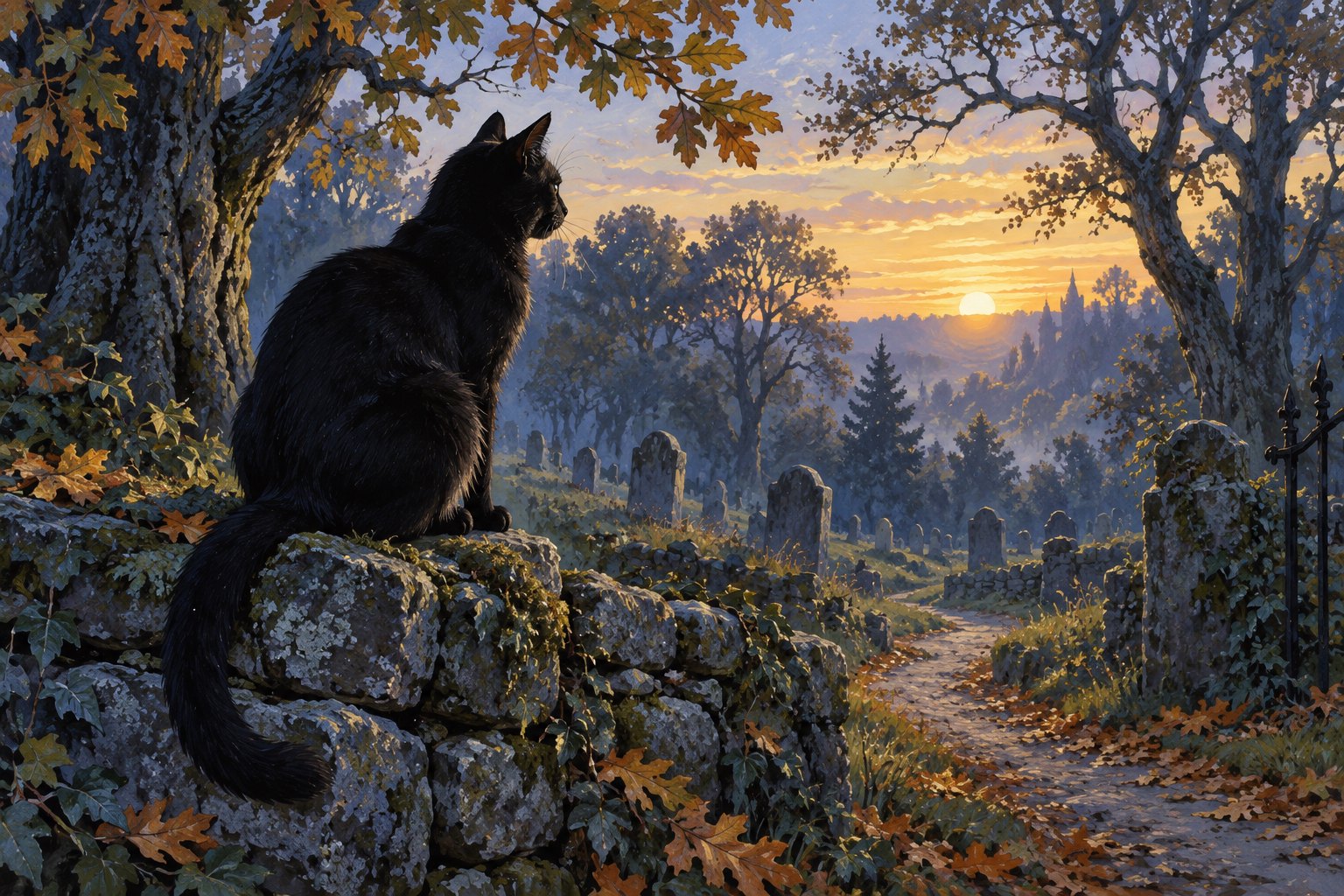
The film’s ending allows his curse to break and his spirit to reunite with Emily. Dani experiences that release as a loss of her own: the friend she wants to keep must leave. The plot’s rescue and farewell unfold together. [AFI’s film synopsis](https://catalog.afi.com/Film/68215-HOCUS-POCUS)
This is where the cemetery setting becomes more than Halloween decoration. A graveyard contains evidence of relationships that continue to matter after someone is gone. Binx’s ending gives that idea a form a younger audience can grasp: loving someone does not always mean being able to hold on to them.
That attention to relationships also guides our look at the human stakes in creature horror. A supernatural threat gains force when the audience understands the bond it might destroy.
A deeper reading: two different responses to mortality
The Sanderson sisters and Binx all exist beyond an ordinary human lifespan, but the film gives that condition opposite meanings. The witches pursue continued life by consuming the future of others. Binx endures continued life with a memory he cannot repair.
Seen through that contrast, the ending becomes unusually tender for such a noisy comedy. Max learns to protect someone else’s future. Binx is permitted to stop carrying the past. The witches cannot accept any limit on themselves.
My verdict is that Hocus Pocus works best as exuberant character comedy with a surprisingly effective emotional foundation. Its uneven pacing and thinly developed Allison keep it from being an entirely satisfying adventure. Yet the affection between its young characters, and the grief beneath Binx’s wisecracks, give the spectacle something lasting to return to.
A cameo to spot on the rewatch
Watch the scene in which the sisters mistake a costumed man for Satan. He and his wife are played by Garry and Penny Marshall, who were siblings in real life. Disney’s D23 confirms the casting—a small extra joke about family in a film already crowded with complicated sibling relationships. [D23’s behind-the-scenes retrospective](https://d23.com/tricks-and-insider-treats-from-disneys-hocus-pocus/)
At the San Antonio screening, the witches will provide the biggest comic flourishes. Pay equal attention to the quieter farewell. Among the gravestones, that may be the moment that feels newly resonant.
Original content by this site's editorial team. Published: October 5, 2026 at 03:40:34 PDT (Los Angeles time)