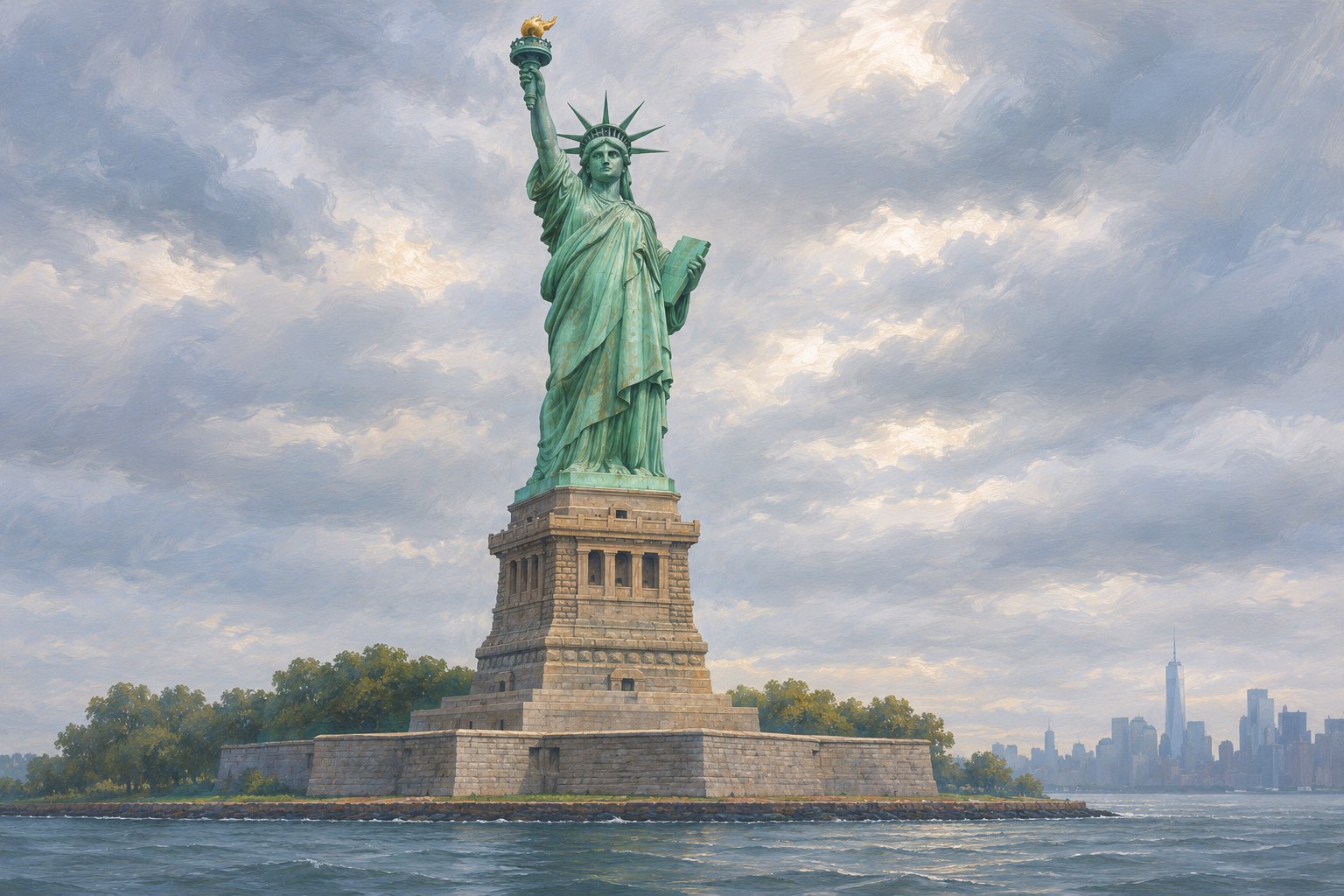
The Statue of Liberty is easy to recognize and rewarding to reconsider. The New York Times Film Club selection How Art and Engineering Built the Statue of Liberty brings those two activities together through a subject that connects visual expression with practical construction. Its title poses an inviting question for movie lovers: how can a film make us look carefully at something we already think we know?
This is a thematic commentary and discussion guide. The complete film and its dialogue could not be independently verified for this article, so assessments of individual scenes, performances, editing, and spoken lines remain open. The focus here is the selection’s central premise and the specific questions that can make a viewing more revealing.
The most interesting word in the title is “built”
“Built” directs attention toward a process. A recognizable monument can become a finished image in the viewer’s mind: a silhouette, a destination, a symbol. Considering its construction introduces decisions, limitations, and work. That shift gives the subject its potential dramatic energy. An object that appears inevitable becomes something people had to figure out.
For a film discussion, the useful distinction is between naming an achievement and explaining one. A statement that an object was difficult to construct offers information. An explanation of a particular problem, the available choices, and the consequences of a solution offers a story. Viewers should listen for those causal connections, especially when a confident narration makes a complex process sound effortless.
My interest in this premise lies in that change of perspective. Understanding how an impressive object became possible can deepen the pleasure of looking at it. The explanation earns its place when the object seems more interesting afterward.
Reading the human story without inventing characters
A character-centered approach to nonfiction begins with a different responsibility from reviewing a drama. Historical subjects have documented actions; they do not automatically have the private thoughts, personal rivalries, or emotional turning points that a familiar movie structure encourages us to imagine.
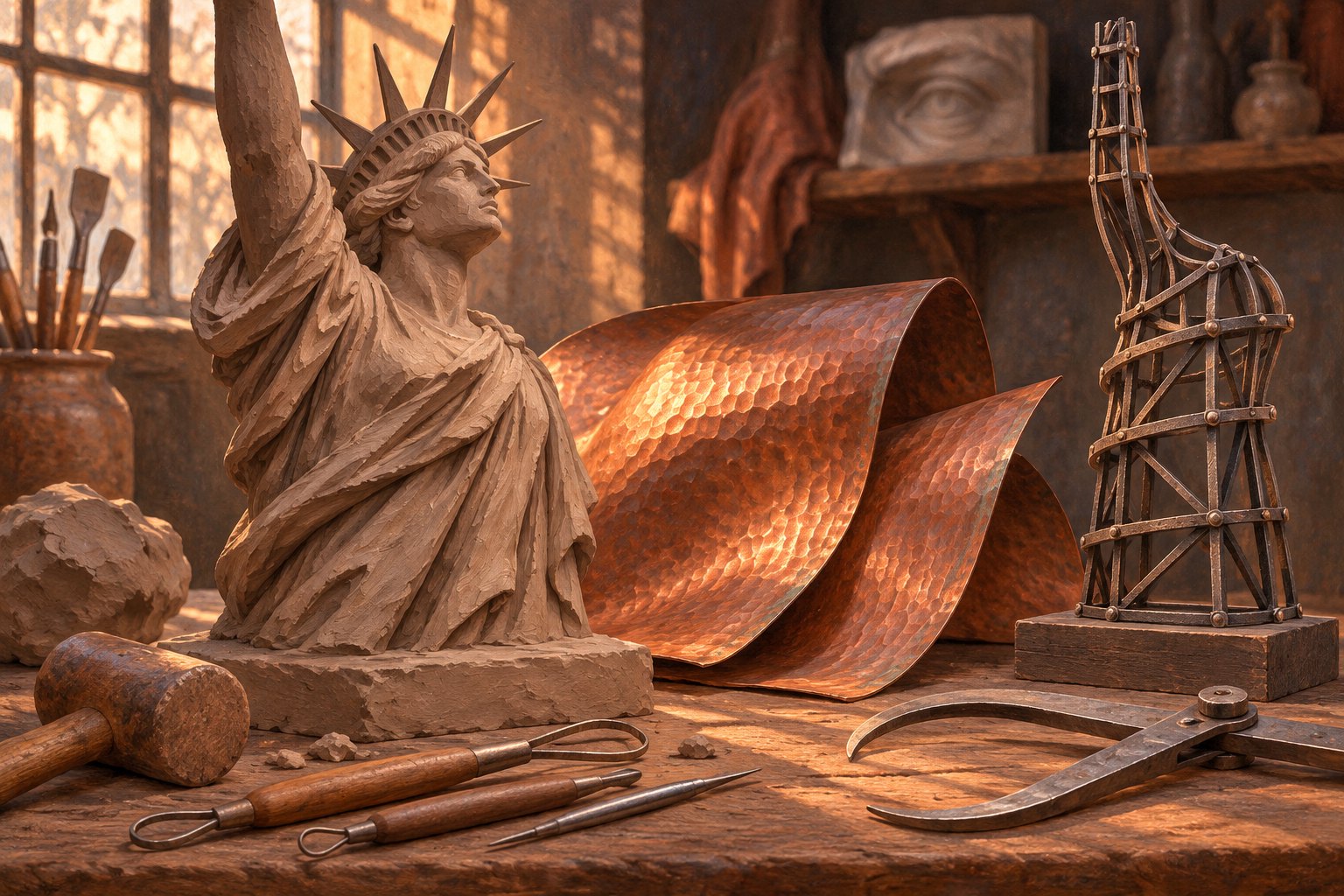
The artistic perspective offers one productive route into this subject. What does a monumental figure need to communicate through its posture, proportions, and relationship to the viewer? This is a question about intention expressed through form. Any answer attributed to a particular person should come from evidence presented in the film or established documentation.
The engineering perspective raises a complementary question: what must happen physically for the intended form to exist? Practical constraints can shape creative decisions. Looking for that interaction is more useful than automatically casting the artist as a dreamer and the engineer as a problem-solving assistant.
A third perspective belongs to the people doing the work. In discussing the film, notice whose contribution receives a name, an explanation, or time on screen. That distribution of attention helps establish the account’s idea of authorship.
What an image can explain about engineering
A screen image can show a shape immediately. Explaining why that shape works requires more. When watching, distinguish between an image that illustrates the narrator’s topic and one that makes the narrator’s reasoning understandable. A beautiful view may establish scale or mood while leaving the central construction question unanswered.
If the film uses diagrams, models, archival material, or close views, consider what each contributes. Can you connect a detail to the whole object? Can you explain the relationship in ordinary language afterward? Those are useful tests of clarity. Technical vocabulary alone does not tell us whether an explanation has landed.
Perspective matters here just as it does in our discussion of how camera choices shape the interpretation of footage. Every view makes certain relationships visible. A thoughtful viewer notices both the evidence offered and the questions that require another angle.
When close looking becomes film criticism
There is a difference between learning about the Statue of Liberty and analyzing a film about it. The first concerns the subject. The second also considers how attention is organized: what appears first, which details receive emphasis, and how sound and images guide a response.
On a first viewing, follow the explanation. On a second, track one formal choice. You might note changes in scale, the relationship between narration and visible detail, or the time allowed to examine an image. Choose something observable and connect it to an effect. “This view helped me understand the relationship between these parts” is a stronger critical observation than “the visuals were impressive.”
That approach also informs our examination of how material qualities give screen images meaning. Texture becomes critically interesting when it affects what we notice or understand. The same standard applies to a film concerned with a physical work of art.
Four questions for a substantive Film Club conversation
A discussion becomes more productive when participants bring a specific observation before offering a broad interpretation. These prompts keep the conversation attached to the Statue of Liberty and the film’s account of its creation:
- Which construction decision became clearest? Describe the explanation and identify the image or statement that made it understandable.
- Where did artistic intention and practical necessity meet? Identify a connection the film establishes, separating it from your own inference.
- Whose perspective organizes the account? Consider how creators, workers, interpreters, or viewers are represented, where applicable.
- What did you notice afterward that you had overlooked before? Explain how that detail changes your reading of the monument.
Disagreement can be especially useful on the last question. One viewer may leave thinking about physical scale, another about collaboration. The important step is showing how the film supports that response.
The deeper question: what does a monument make visible?
The most compelling interpretation of this premise, to me, concerns the relationship between a public image and the work that sustains it. A monument presents a coherent form. Thinking about construction asks us to recognize the many decisions required to produce that coherence.
That offers a meaningful way to consider liberty itself, provided we identify the connection as interpretation. An abstract ideal acquires public presence through material choices and collective effort. The analogy has force because it asks what making an ideal visible demands; it does not establish what any historical participant privately believed.
For a Film Club audience, the lasting value of this subject may be a more attentive gaze. Return to the familiar figure and consider expression, structure, and labor together. Recognition gives us the outline. Close looking gives us something worth discussing.
Original content by this site's editorial team. Published: November 4, 2026 at 23:15:17 PST (Los Angeles time)