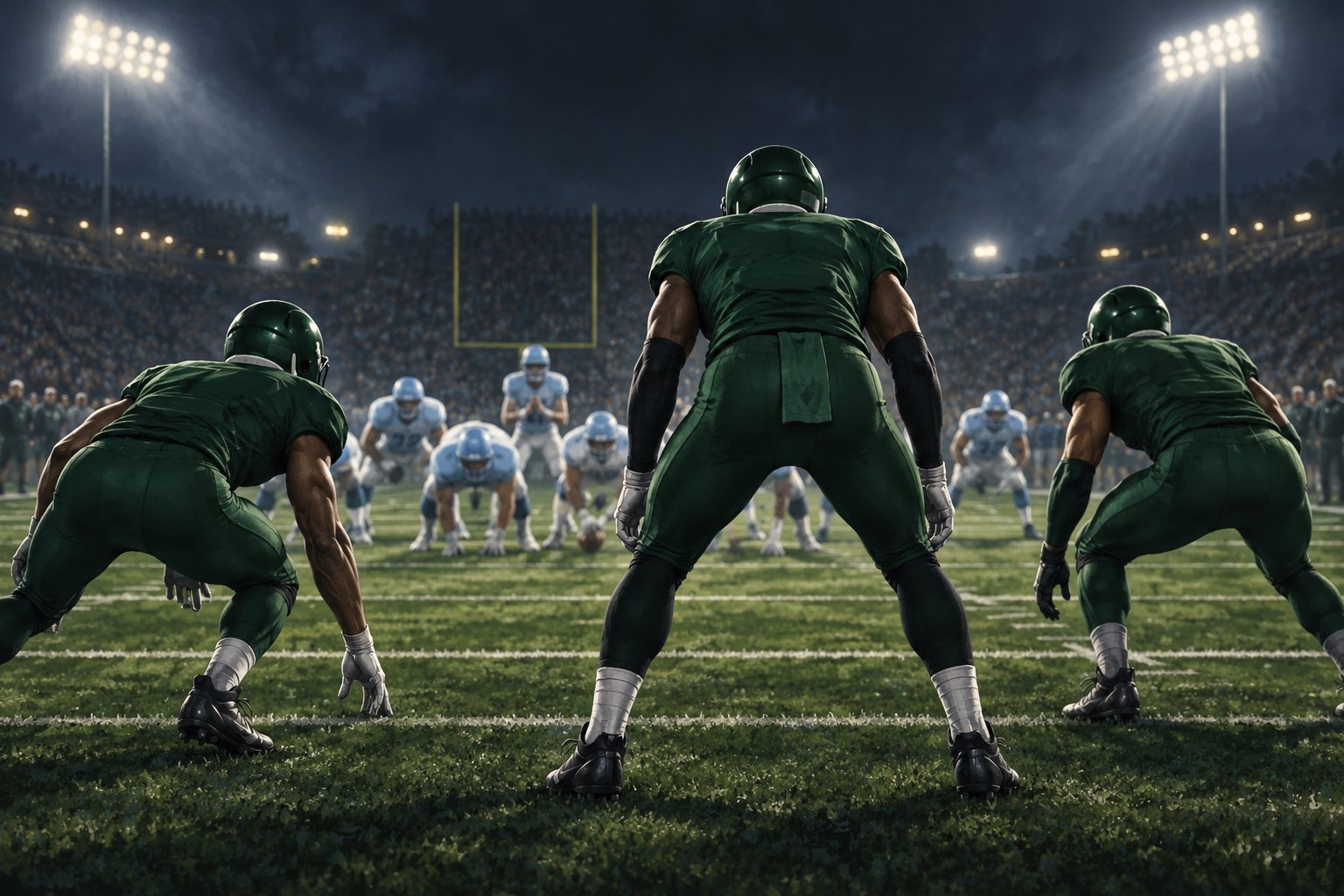
The Eagles’ defense belongs at the center of the Eagles–Panthers film-review discussion, but evaluating it requires holding two ideas together: a unit can need more support and still owe its team better execution. Those explanations address different parts of the problem. Treating either one as the complete answer makes the other disappear.
Here, film review means studying football footage. The central issue is defensive responsibility, not a movie’s plot or performances. Bleeding Green Nation’s assessment frames Philadelphia’s defense as both needing assistance and needing to improve. That is a useful starting point for commentary, although it does not, by itself, establish which players, calls, or circumstances deserve the most blame.
This article examines that argument and the standards needed to evaluate it. It does not offer an independently charted, play-by-play account of the game.
First Define What Help Would Actually Change
Help is an appealing word because almost everyone can agree with it. Its weakness is that it can describe several different solutions. A defense might benefit from more favorable field position, additional recovery time between possessions, a different deployment of its personnel, or a call that reduces a difficult assignment. Each possibility requires different evidence.
For Philadelphia, the useful question is therefore specific: which burden would a proposed change remove? Asking the offense to sustain possessions addresses one potential burden. Changing coverage responsibilities addresses another. Adding a player would address a third. None should become the assumed diagnosis simply because the broader performance is frustrating.
My view is that the strongest criticism connects a problem to a plausible remedy. If the concern is an unfavorable matchup, explain how the defense could protect it and what that protection would expose elsewhere. If the concern is accumulated workload, examine when execution deteriorates. A diagnosis becomes valuable when it can be challenged by what happens on the field.
Judge the Assignment Before Judging the Player
Football footage encourages immediate judgments. A receiver catches the ball, the camera follows the nearest defender, and responsibility appears settled. Yet proximity to the result does not necessarily identify the person who caused it. The defender arriving late may be recovering from an earlier mistake elsewhere, or may have made the original mistake himself.
A careful Eagles–Panthers review should begin before the decisive moment. Where are the defenders aligned? What changes before the snap? Which spaces do their initial movements appear designed to protect? Those observations help establish what the defense is attempting before the outcome influences the interpretation.
Even then, an observer should distinguish a visible movement from an inferred assignment. Footage can show two defenders following one receiver. It may not reveal which player misunderstood the call. That distinction allows firm criticism of a breakdown without inventing certainty about an individual’s instructions.
There is a useful connection here to how a screen narrative can turn a person into a fixed character. Once someone becomes the designated culprit, each new image risks being interpreted as confirmation. Responsible analysis keeps testing that story against the evidence.
Execution Is More Specific Than Effort
Saying the Eagles must improve should lead to observable standards. Effort alone is too imprecise a diagnosis. A defender can pursue aggressively while taking an angle that makes the eventual tackle harder. He can react quickly to the wrong cue. He can win an individual confrontation while moving out of the space the defense needs him to occupy.
Useful execution questions concern sequence and coordination. Did the player begin from a workable position? Did his first movement preserve his options? Did he approach contact with control? Did the players around him act as though they understood the same adjustment? These are evaluation criteria, not claims that each problem occurred against Carolina.
That specificity also makes improvement recognizable. A defense does not have to produce a spectacular takeaway to demonstrate progress. A routine stop can reflect good positioning, a disciplined approach, and teammates arriving where the first defender expects them. Those ordinary successes deserve attention because dependable defense is built from repeatable actions.
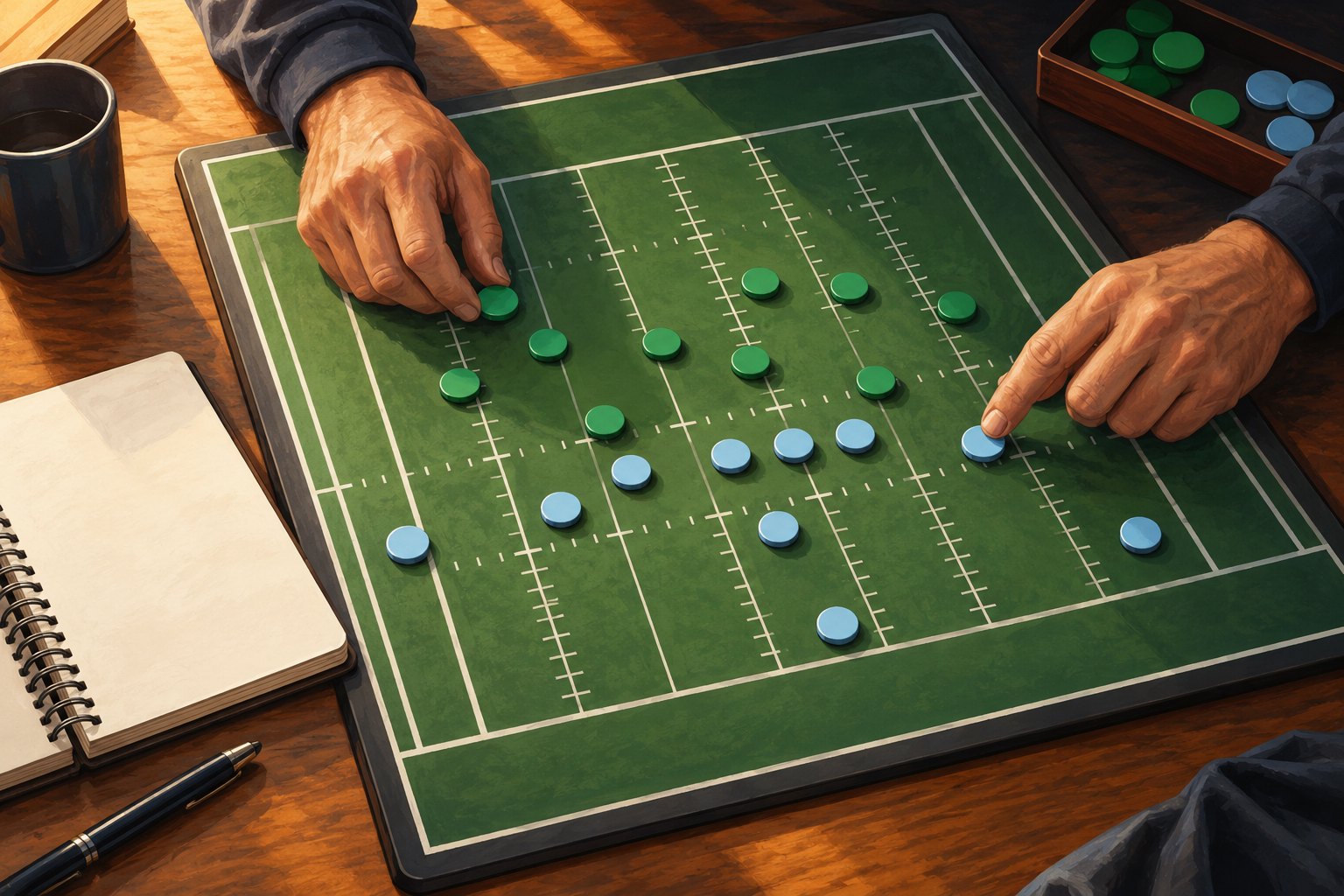
Give Carolina a Place in the Explanation
An Eagles-centered review can become so absorbed in Philadelphia’s shortcomings that Carolina disappears as an active opponent. That produces an incomplete account. Every defensive assignment is being tested by players trying to manipulate space, timing, and attention.
The appropriate question is what the Panthers attempted to make difficult. Did an offensive design force a choice between competing responsibilities? Did a player succeed despite sound positioning? Or did the defense provide an opening that required relatively little to exploit? Those possibilities deserve separate treatment rather than being bundled into a general complaint about Philadelphia.
This matters when assigning credit as well as blame. An offense can execute well against a reasonable defensive response. Conversely, an unsuccessful offensive play does not prove the defensive decision was sound. Outcome and process are connected, but a single result cannot fully describe their relationship.
Watch Sequences Instead of Collecting Highlights
A practical way to assess the Eagles’ defensive argument is to watch a sequence several times, giving each pass a different purpose. The aim is to understand how the play develops before deciding what it means.
- Establish the situation. Note down, distance, field position, and the visible formation. These details shape the risks each team can reasonably take.
- Follow the beginning. Watch alignment, motion, and the first movements after the snap. An apparent late failure may originate much earlier.
- Follow one responsibility. Track a defender or an area of the field instead of following the ball throughout.
- Examine the finish. Separate arriving in position from completing the play. Both matter, and they may require different corrections.
- Look for recurrence. Compare similar situations before calling something a persistent weakness. Keep uncertain assignments labeled as uncertain.
This approach also prevents a handful of dramatic plays from standing in for an entire performance. Our discussion of the difference between a striking moment and sustained impact considers a related critical problem: memorable images can dominate judgment without explaining how well the whole work functions.
The Deeper Issue Is Shared Responsibility
The most productive interpretation of the Eagles–Panthers defensive debate is that accountability operates at several levels. Players answer for their decisions and technique. Coaches answer for preparation, assignments, and adjustments. The wider team influences the conditions under which the defense works. Recognizing those connections makes criticism more demanding because it requires identifying who can change what.
It also prevents sympathy from becoming a permanent exemption. Difficult circumstances deserve consideration, but they should lead to more precise expectations. Which actions remain reasonably within the unit’s control? Which expectations need adjustment? Which proposed changes would make competent execution easier to repeat?
My judgment is that Philadelphia’s defensive discussion should be measured by how well it answers those questions. Support should have a defined purpose, and accountability should point toward a correction. The meaningful standard is a defense whose responsibilities make sense together—and whose players carry them out consistently enough that the next review can explain progress rather than merely redistribute blame.
Original content by this site's editorial team. Published: October 21, 2026 at 13:45:28 PDT (Los Angeles time)