Drake Maye’s performance and New England’s defense are the central subjects of the Patriots’ After Further Review coverage following the Week 5 win over the Raiders. For viewers returning to that game, the useful question is how individual decisions contributed to the result. A victory establishes the outcome; understanding the performance requires attention to timing, available space, and the work happening away from the ball.
This is football film study: an examination of game footage. The discussion below offers an analytical framework for approaching Maye’s snaps, the defensive review, and the shorter observations surrounding them. It does not assign individual play grades or reconstruct sequences without evidence.
Start With What Maye Could Know
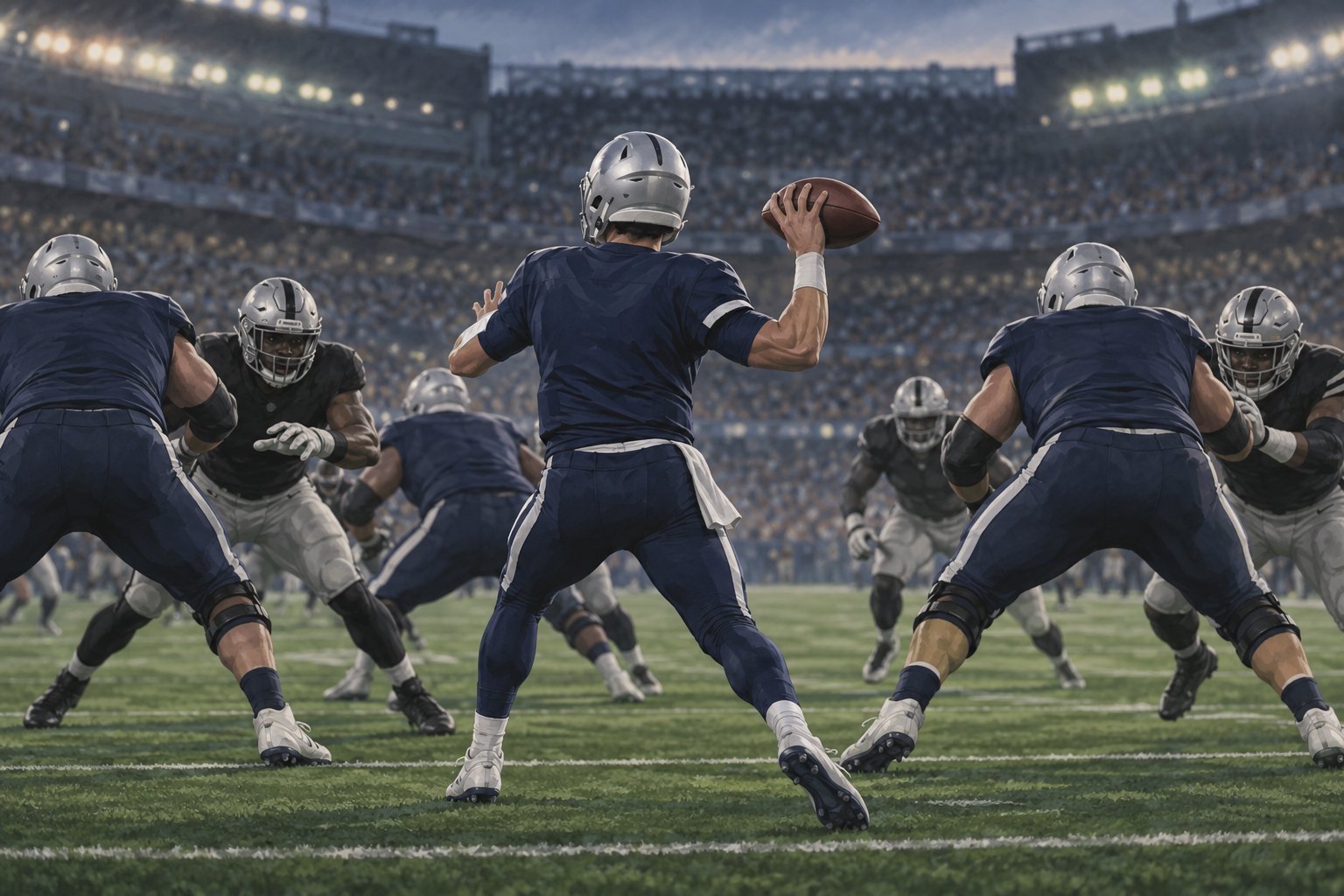
A quarterback’s decision deserves to be evaluated at the moment he makes it. Watching a completed play gives the audience information that Maye would not yet possess when setting his feet or beginning his throwing motion. A receiver who eventually appears open may have been covered when the ball needed to leave.
That difference should shape any assessment of Maye against the Raiders. Pause before the throw and identify the visible options. Then watch the defenders’ movement. Does an opening exist early enough to use? Would reaching it require the quarterback to reset while pressure closes in? Those questions are more revealing than judging a decision solely by where everybody ends up.
Separate the choice from the throw
Decision quality and execution belong in separate columns. A quarterback can identify a sensible target and deliver an inaccurate pass. He can also complete a risky throw because a receiver makes an exceptional adjustment. Combining those situations into a single positive or negative judgment obscures what actually needs praise or correction.
For Maye, a useful review would therefore distinguish target selection, release timing, and ball placement. Placement matters beyond whether a pass is catchable: it can influence a receiver’s ability to continue moving and a defender’s opportunity to contest the ball. Any specific conclusion still needs the relevant angle and sequence.
Watch the feet alongside the coverage
Footwork offers another visible part of the decision. Watch whether the quarterback reaches a balanced position as a route develops, whether movement creates a usable throwing lane, and whether a reset appears necessary. Avoid assuming that every extra step signals hesitation. The pocket and the receiver’s timing may explain it.
My preference is to begin at normal speed, then slow the sequence down. Slow motion helps isolate mechanics, but it also makes brief opportunities look generous. Returning to full speed restores the urgency under which Maye had to act.
Give the Supporting Work Its Own Attention
Quarterback-centered coverage can make an offense feel like a one-person performance. A more complete reading asks what enabled the quarterback’s action. Protection, route spacing, and a receiver’s movement can all shape the available choice before the pass becomes the obvious focal point.
On a replay, follow one blocker or one receiver through the entire snap. Resist switching immediately to the ball. A route that never receives a target can still occupy a defender; a block can preserve the space needed for a throw. These are possibilities to investigate in the Raiders game, rather than accomplishments to assume.
There is a useful connection here to examining perspective and context in screen criticism. In both settings, concentrating on the most prominent figure can hide the conditions that make an action possible. Football adds a crucial complication: the opposing side is actively trying to destroy those conditions.
Read the Patriots’ Defense as a Connected Unit
The defensive portion of the Week 5 review deserves the same patience. Following only the eventual tackler gives an incomplete account of a possession. The more informative question is how New England’s defenders affected the Raiders’ available choices together.
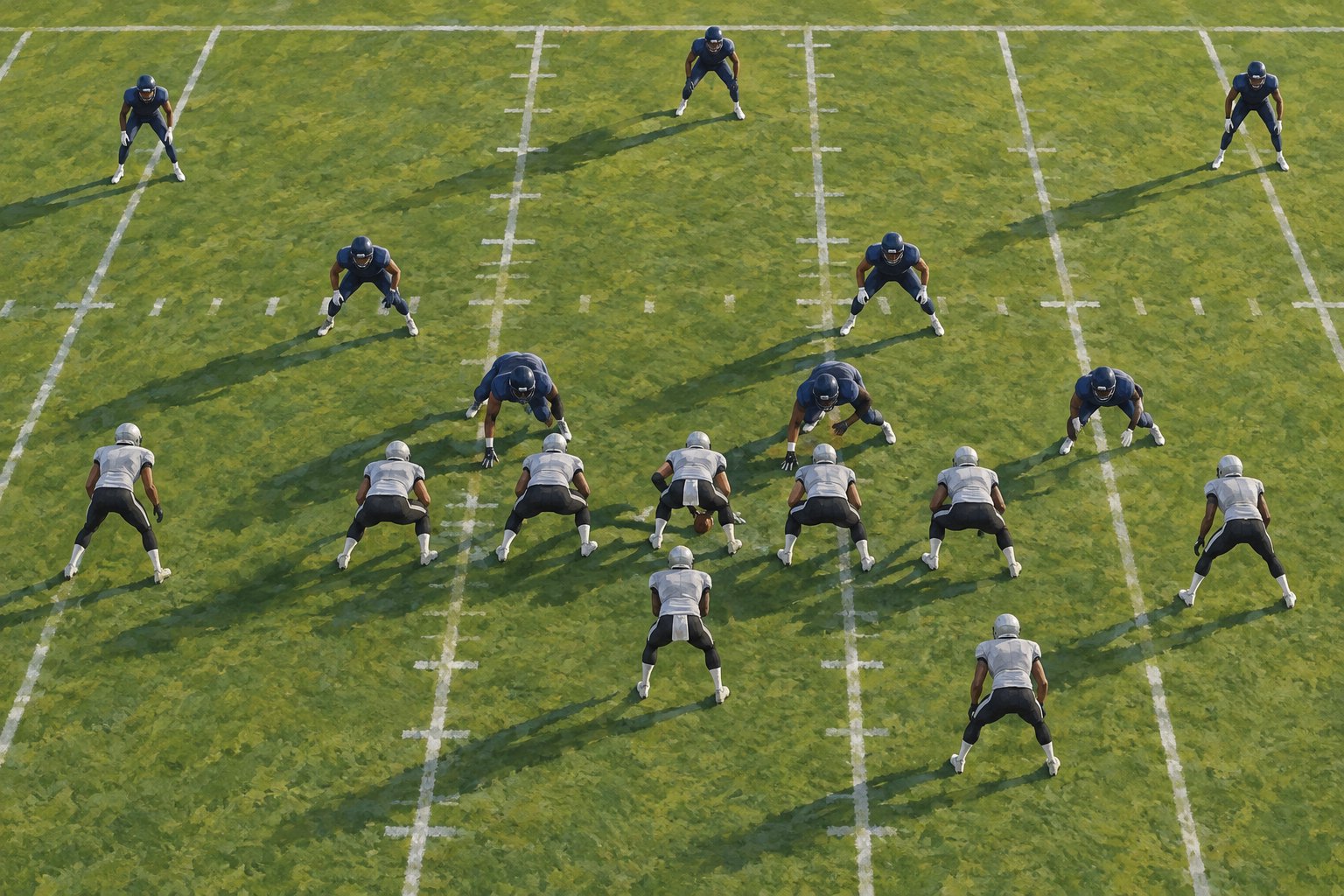
On passing plays, examine pressure and coverage in the same sequence. A rusher arriving late may benefit from coverage that delays a throw. Conversely, a defender may have to cover for less time because pressure forces an early release. Neither explanation should become a blanket verdict without checking the footage.
Our discussion of the action preceding Budda’s blitz sack against the Lions explores that relationship between a visible finish and its setup. For the Patriots’ defensive review, extend the attention across ordinary snaps, including plays without an obvious highlight.
A result does not identify every assignment
An unsuccessful Raiders play would not automatically establish perfect defensive execution. Likewise, a completed pass would not identify which Patriot, if any, made an error. The camera can show positions and movement; it does not necessarily reveal the defensive call.
That limitation matters when assigning responsibility. Describe what is visible before interpreting it. A defender moving toward the sideline is an observation. A claim that he abandoned his assignment requires more knowledge. Careful wording preserves useful analysis without turning uncertainty into blame.
Make Quick-Hit Notes Specific Enough to Check
Short observations work best when they retain a clear connection to evidence. For a personal review of this matchup, organize each note around three elements:
- Observation: Record a visible action, such as a quarterback reset or a defender changing direction.
- Possible significance: Explain how that action might affect timing, space, or the available target.
- Limit: Identify what the camera angle or missing assignment information prevents you from concluding.
Keep successful and unsuccessful plays in the same notebook. Reviewing only the best moments risks making every decision look inevitable. Reviewing only mistakes can conceal the ordinary execution that sustains an offense or defense.
Also distinguish an isolated example from a recurring pattern. One snap can illustrate a possibility. A broader claim about Maye’s decision-making or New England’s defensive approach needs several relevant examples, considered alongside the situations in which they occurred.
The Deeper Question Is What Can Be Repeated
The appeal of revisiting the Raiders win is the chance to understand how success was produced. My view is that the most valuable conclusions concern repeatable decisions: recognizing an opportunity, maintaining useful spacing, executing a responsibility, and responding when the opponent changes the picture.
That is the standard a meaningful Maye breakdown and Patriots defense review should meet. The quarterback remains central, but the analysis becomes richer when it explains his relationship to the players around him. The lasting insight comes from seeing how several simultaneous decisions create—or remove—the possibility of a successful play.
Original content by this site's editorial team. Published: October 15, 2026 at 05:21:01 PDT (Los Angeles time)