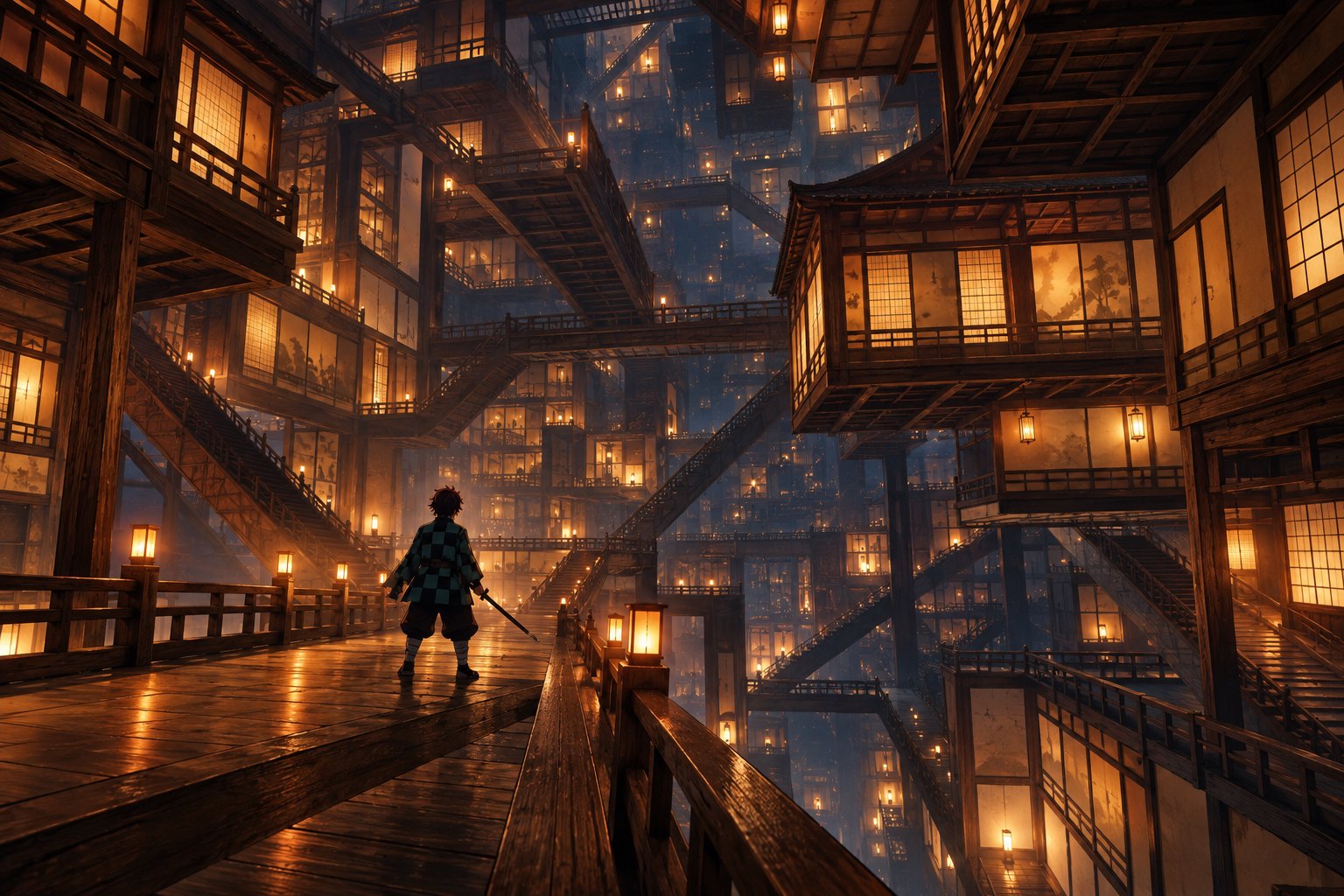
Demon Slayer: Kimetsu no Yaiba Infinity Castle I continues the story after the Hashira Training Arc, sending Tanjiro and his allies into Muzan’s shifting fortress. For viewers encountering its Netflix listing, the essential distinction is that this is the first Infinity Castle film, continuing the television story—not the second installment of the castle saga. Netflix’s film guide confirms that narrative connection and lists the movie as available to stream; availability should be checked in your region. [Netflix’s film guide](https://www.netflix.com/tudum/articles/demon-slayer-kimetsu-no-yaiba-infinity-castle-release-date-cast-news)
As a piece of character-driven action, its most compelling idea is that strength cannot be understood separately from loss. Shinobu, Zenitsu, and Akaza all enter their defining confrontations carrying relationships that violence has damaged. My reading is that the film succeeds most powerfully when those relationships change what victory means. Its sprawling combat is the attraction; its argument about the purpose of strength is what gives the spectacle weight.
Major spoilers follow, including character deaths and the resolution of the Akaza battle.
A fortress that makes isolation physical
The castle turns separation into a visible threat. Its shifting rooms and passages deny the Demon Slayers the reassurance of stable ground or a reliable route toward one another. An army becomes a collection of vulnerable individuals and small partnerships. The practical problem—finding an enemy inside an impossible building—also becomes an emotional one: how do you keep acting for others when you cannot reach them?
That makes the setting more interesting than an elaborate combat arena. Familiar architectural elements promise shelter, then become part of a trap. A room is no longer somewhere to recover; it may simply be where the next confrontation begins. The castle’s scale diminishes its human occupants before any demon strikes.
This is also why prior familiarity matters. The film’s stakes depend heavily on accumulated attachments. Newcomers can understand danger immediately, but understanding why a particular opponent inspires shame, fury, or dread requires the earlier story.
Shinobu: anger without the comfort of superiority
Shinobu’s encounter with Doma brings her face-to-face with the demon who killed her sister, Kanae. She attacks with poison and speed, but Doma adapts. He ultimately kills and absorbs her, with Kanao witnessing the horror. The outcome gives the film an early rupture that later victories cannot simply repair. [The Movie Spoiler’s plot account](https://themoviespoiler.com/movies/demon-slayer-infinity-castle/)
The confrontation is disturbing because Doma’s apparent friendliness offers no possibility of recognition. Shinobu’s anger has a specific human history. His pleasant manner refuses to acknowledge that history’s significance. She is confronting someone who can address her without accepting the moral reality of what he has done.
From her perspective, skill must compensate for a disadvantage that determination alone cannot erase. That is a useful limit for an action film to preserve. The audience’s investment in a character does not guarantee that character physical supremacy.
My reservation concerns the emotional burden placed on the larger story. Shinobu’s death creates an obligation that this installment cannot fully discharge. Here, the immediate experience is loss and interruption. The film asks viewers to remain with that pain while its attention moves elsewhere.
Zenitsu: becoming someone his teacher believed in
Zenitsu faces Kaigaku, his former fellow student, whose transformation into a demon led their teacher to take his own life. The encounter makes their shared training an accusation: the same inheritance has produced radically different choices. Netflix’s synopsis identifies that betrayal as the personal wound driving their fight. [Netflix’s character and story overview](https://www.netflix.com/tudum/articles/demon-slayer-kimetsu-no-yaiba-infinity-castle-release-date-cast-news)
For Zenitsu, the emotional challenge is larger than proving that Kaigaku underestimated him. He must live with the feeling that he failed someone who invested love and patience in him. The fight therefore carries a familiar anxiety beneath its extraordinary abilities: becoming capable too late for the person whose approval mattered.
His teacher’s remembered affirmation, “You are my pride and joy,” answers that anxiety with affection rather than another demand for achievement. The wording is recorded in the film’s English dialogue listings. It matters because Zenitsu’s worth is acknowledged as a relationship, not merely measured as a result. [Selected film dialogue](https://en.wikiquote.org/wiki/Demon_Slayer%3A_Kimetsu_no_Yaiba_%E2%80%93_The_Movie%3A_Infinity_Castle)
That distinction gives his development emotional credibility. Becoming stronger need not mean outgrowing the need to be loved. In this reading, maturity means carrying that love into an action the teacher can no longer perform for him.
Tanjiro and Giyu: strength as a shared responsibility
Against Akaza, Tanjiro fights beside Giyu. The pairing gives the confrontation a different foundation from the other major battles: survival is immediately collaborative. Their dependence on one another challenges the idea that an exceptional fighter should be self-sufficient.
Tanjiro’s objection to Akaza is also philosophical. “The strong aid and protect the weak” condenses his position into a practical duty. Strength has value because somebody needs protection, rather than because superiority deserves admiration. The line’s English wording appears in the film’s dialogue collection. [Tanjiro’s dialogue](https://en.wikiquote.org/wiki/Demon_Slayer%3A_Kimetsu_no_Yaiba_%E2%80%93_The_Movie%3A_Infinity_Castle)
The partnership consequently does more than distribute the action between two swordsmen. It supplies a lived alternative to Akaza’s worldview. As our discussion of how memorable movie partnerships change their characters explores, a duo becomes dramatically meaningful when the relationship changes the possibilities available to each person.
Akaza: remembering what strength was supposed to protect
Akaza’s human past supplies the film’s central reversal. As Hakuji, he found a home with Keizo and developed a relationship with Keizo’s daughter, Koyuki. Their poisoning destroyed that future. During the battle’s resolution, those memories return, and Akaza ultimately stops perpetuating his own violence. [The Movie Spoiler’s ending account](https://themoviespoiler.com/movies/demon-slayer-infinity-castle/)
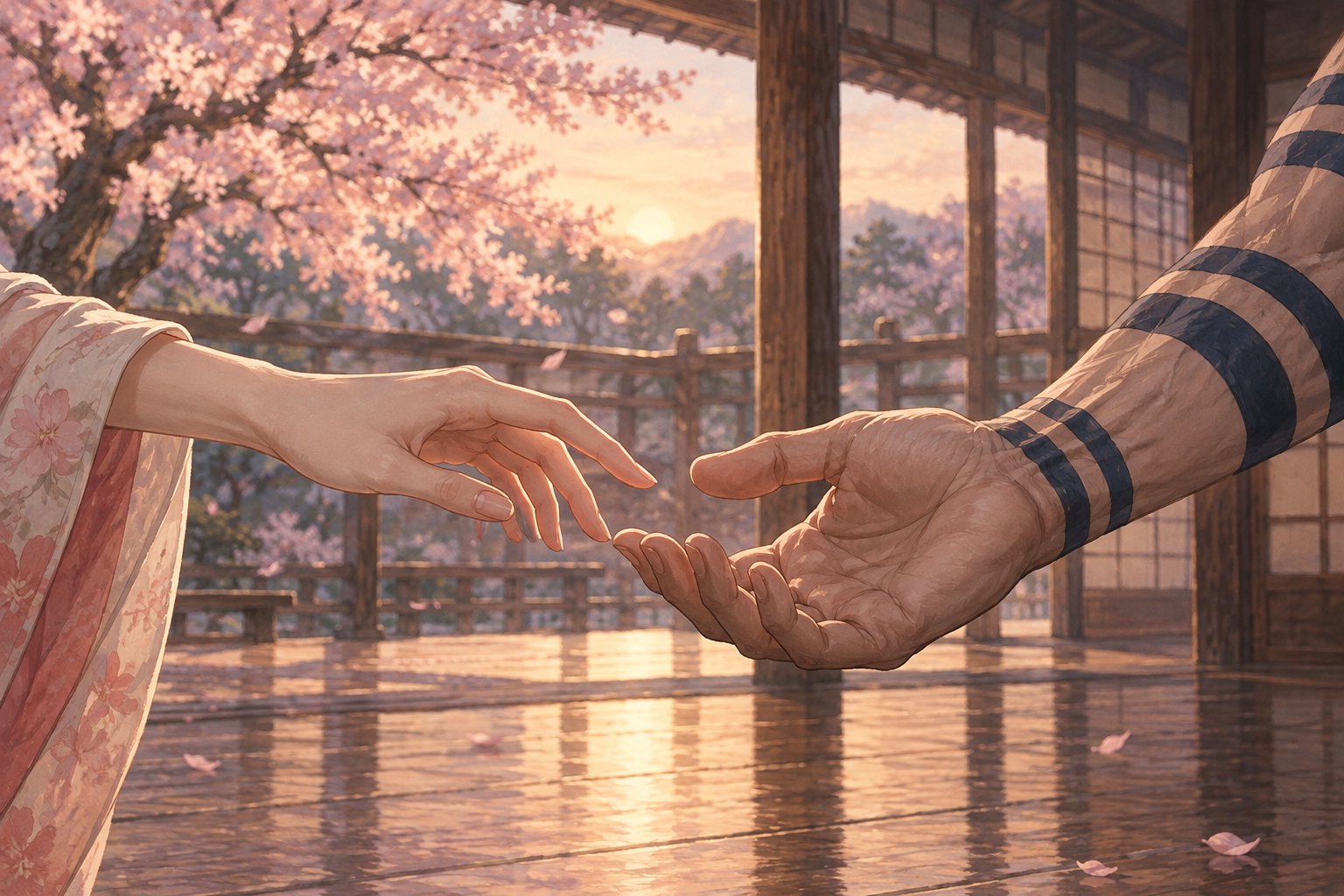
The tragedy lies in the contradiction between possessing power and having no one left to protect. Read through that contradiction, Akaza’s obsession with strength becomes a purpose that has survived the destruction of its meaning. He continues pursuing the instrument after losing the life it might have served.
Understanding this history does not erase responsibility. The film’s emotional force depends on holding two truths together: Hakuji suffered terribly, and Akaza inflicted suffering. Compassion becomes more demanding when it requires acknowledging both.
The return of memory also changes the battle’s dramatic question. Physical endurance ceases to be the only measure that matters. The possibility of continuing becomes inseparable from the question of whether continuing would mean repeating the same moral failure.
An unfinished war with a meaningful emotional endpoint
Infinity Castle I leaves the larger struggle unresolved. That creates a structural limitation: viewers seeking a self-contained adventure will encounter substantial dependence on what came before and what must follow. Yet Akaza’s story gives the installment an emotional destination beyond simple anticipation.
It meets the challenge discussed in why a first film must offer more than a prologue: a continuing story still needs an experience worth having now. Here, that experience is the gradual redefinition of strength.
My verdict is that the character conflicts provide the film’s strongest justification for its scale. Shinobu demonstrates that courage cannot guarantee survival. Zenitsu discovers that love is not conditional on flawless achievement. Tanjiro treats dependence as a human truth. Akaza confronts the emptiness of power severed from care. Together, they make the castle a place where the past demands an answer—and where winning a fight is only one possible answer.
Original content by this site's editorial team. Published: September 30, 2026 at 08:57:30 PDT (Los Angeles time)