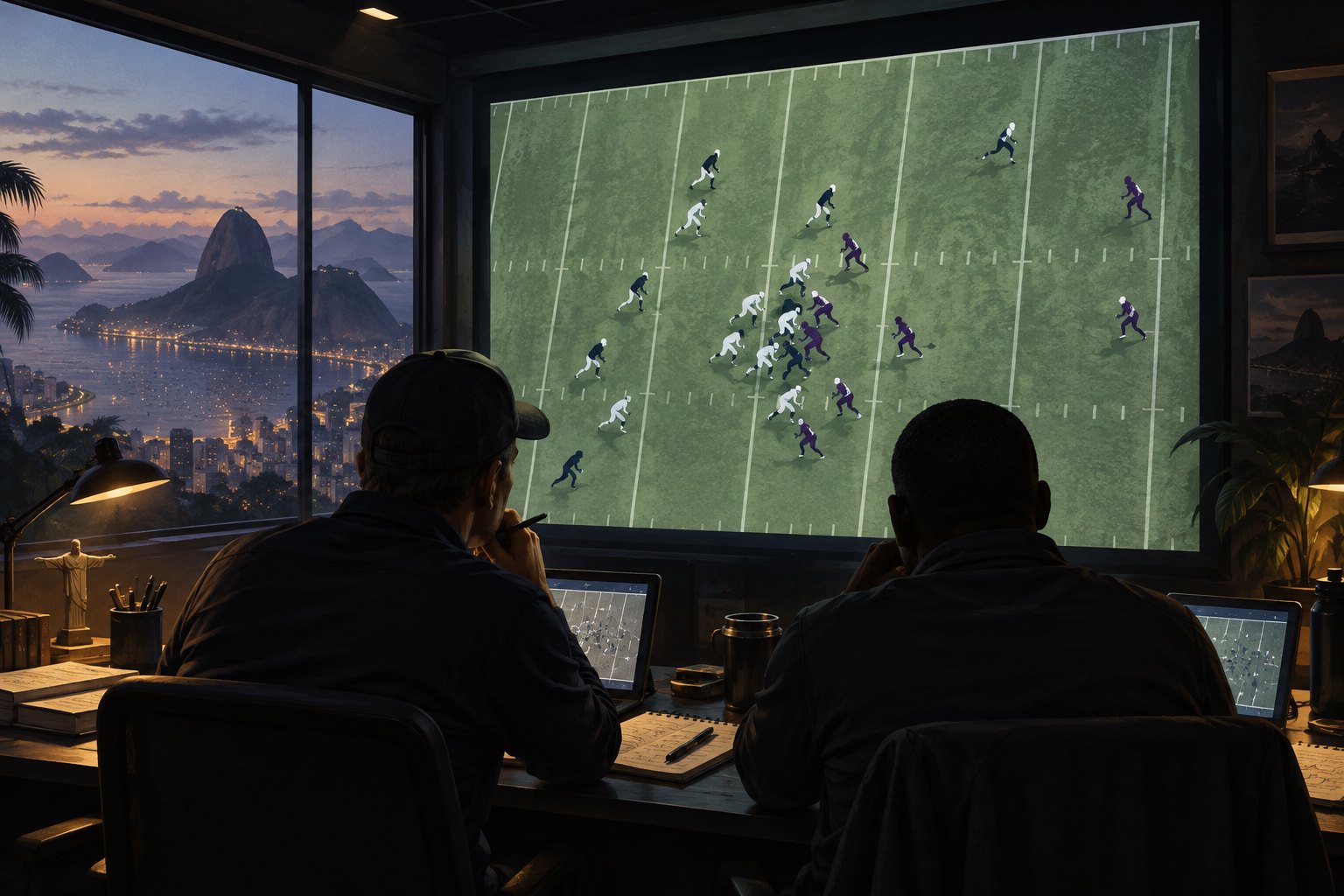
Cowboys–Ravens in Rio de Janeiro is the subject of the Dallas Cowboys’ Tape Talk coverage, and the important word here is tape. This is football film study: an attempt to understand a contest through recorded action. For viewers looking for what stood out, the real value of that approach is its ability to move beyond a spectacular finish and examine how a play became possible.
A crucial distinction comes first. This is a critical viewing guide to the matchup’s film-study premise, not a play-by-play verdict based on independently examined footage. Specific claims about missed assignments, coaching decisions, or individual responsibility require the relevant sequences. But the Cowboys–Ravens subject offers a useful opportunity to ask what an illuminating breakdown should show—and what a convincing-looking replay can still leave unresolved.
Start With the Action Before the Highlight
A highlight directs attention toward the moment of payoff. Football analysis needs to work backward from it. The catch, tackle, or escape may be the most watchable image, yet the decisive action might have happened elsewhere several seconds earlier. Following only the ball can conceal the work that shapes the ball carrier’s choices.
When approaching the Rio matchup, begin each sequence before the snap. Notice where players are positioned, how much space separates them, and whether anyone moves before the action starts. Then watch the entire play at normal speed. Only afterward should a freeze-frame become part of the argument.
This order matters because a still image can make a fleeting opportunity look comfortable and obvious. A gap that appears generous when paused may exist only briefly. My standard for useful tape analysis is simple: it should explain the developing action, not merely identify a favorable-looking frame after everyone knows the outcome.
Player Perspective Changes the Interpretation
For a film audience, perspective usually means asking what a character knows within a scene. The equivalent question in football is concrete: what could this player reasonably see, and when could he see it? The viewer’s elevated camera angle is not the athlete’s field-level experience.
The Player Holding the Ball
If a sequence involves a pass, separate the appearance of an available receiver from the passer’s opportunity to deliver the ball. Those are related questions, but they are not identical. A replay might reveal open space without establishing that the passer had an unobstructed view or sufficient time to use it.
A fair reading therefore tracks the order of events. Does the space appear before pressure arrives or after? Is the passer already moving? Does the camera show the relevant defenders? These are questions to investigate in Cowboys–Ravens footage, not conclusions about what any particular player did.
The Players Away From the Ball
Receivers, blockers, and defenders help determine what the central action can become. Watching one of them for an entire sequence can transform a replay that initially seemed straightforward. Attention shifts from a single conspicuous decision to a relationship between movements.
That distributed attention has a counterpart in our discussion of why an ensemble matters in House of Guerrero: the person occupying the center of the frame does not necessarily explain everything happening within it. In football, however, that observation must lead back to visible positioning and timing rather than invented motives.
The Camera Can Reveal a Play—and Conceal Its Cause
A close view makes physical details legible. A wider view makes relationships legible. Neither automatically provides a complete explanation. If a receiver leaves the frame, the viewer loses information about his route. If the image stays wide, a subtle interaction near the ball may become difficult to judge.
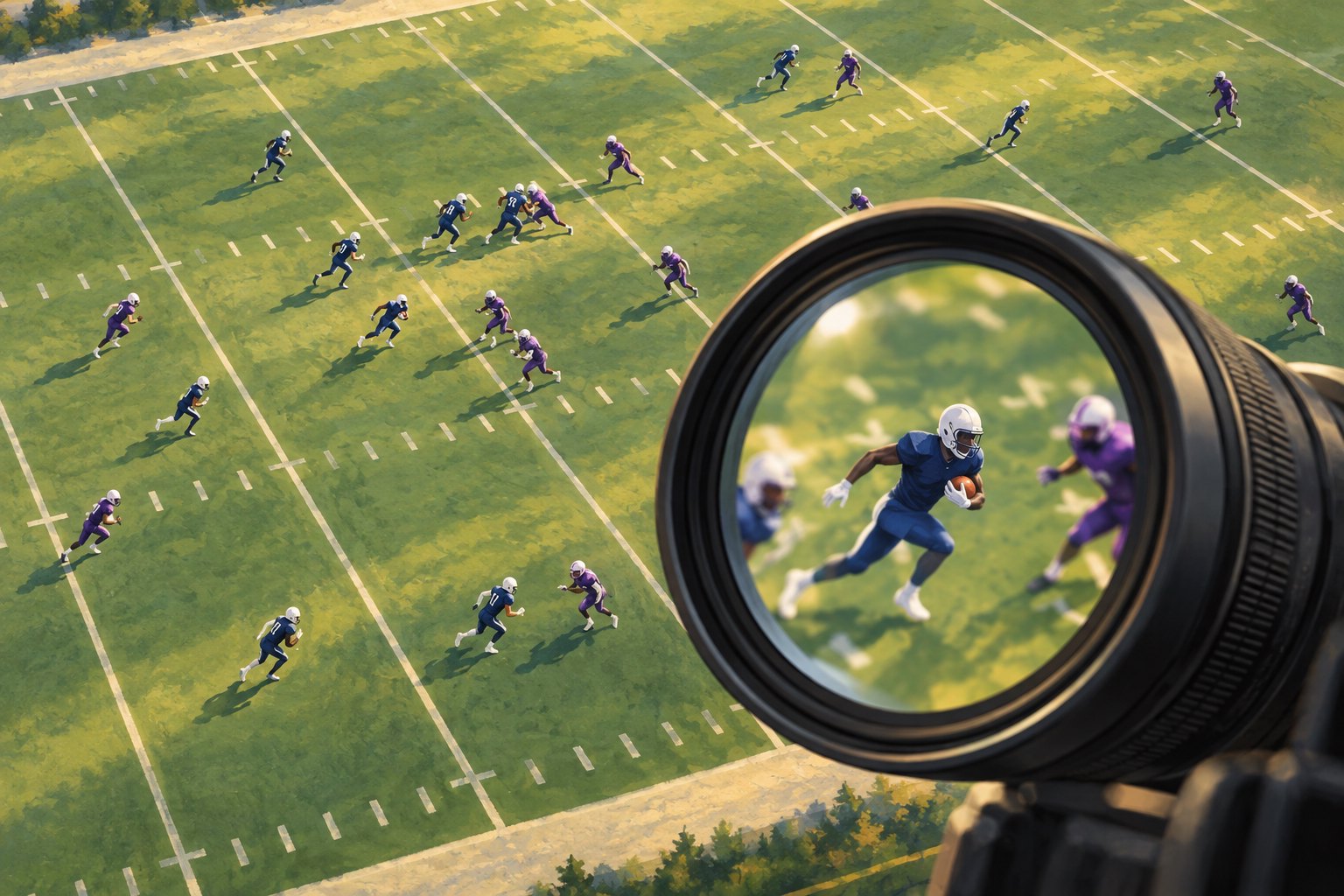
For the Rio film discussion, an especially useful habit is to identify the boundaries of each shot. Before accepting an explanation, ask whether the footage actually includes the players whose actions supposedly caused the result. An unseen movement cannot become established evidence simply because a commentator describes it confidently.
Editing also changes emphasis. Repeating one player’s reaction can make that player feel like the emotional center of a sequence. Returning repeatedly to a particular mistake can make it seem representative of an entire performance. Those choices may support an argument, but repetition itself does not supply additional evidence.
Separate What Happened From Why It Happened
The strongest analysis distinguishes three levels of certainty. First comes observable action: a player changes direction or another crosses his path. Next comes interpretation: that movement appears to create space. Finally comes assignment: the player was specifically instructed to produce that effect.
Moving from the first level to the third requires more than an attractive replay. Without knowledge of the call or corroborating explanation, a viewer should leave room for uncertainty. Describing an apparent coverage breakdown is different from knowing exactly whose responsibility was missed.
This distinction also matters in screen criticism. Our examination of Unabomber’s lone-investigator framing considers the problems created by organizing a complicated story around a single explanatory figure. The corresponding temptation in sports is to make one visible participant carry an entire causal argument.
My preference is for an account that acknowledges the opposition’s contribution. Dallas and Baltimore are participants in the same unfolding action. An outcome that looks like one side’s failure may also involve the other side recognizing an opportunity and responding effectively. A balanced interpretation tests both possibilities.
A Practical Way to Rewatch Cowboys–Ravens
To turn the Tape Talk premise into a useful viewing exercise, give each replay a different job:
- Watch the complete sequence. Establish its beginning, development, and result before isolating a moment.
- Follow someone away from the ball. Look for an interaction the initial viewing made easy to overlook.
- Check the timing. Determine whether an apparent option existed when the relevant decision was being made.
- Mark the camera’s limits. Notice which players or areas disappear from view.
- State a narrow conclusion. Describe what the sequence supports and keep unverified assignments conditional.
One play can illustrate a mechanism. It cannot, by itself, establish a persistent tendency. If a breakdown makes a broader claim about either team, look for multiple comparable examples and consider whether the situations are sufficiently alike.
What the Rio Setting Adds—and What It Cannot Explain
Rio de Janeiro gives this Cowboys–Ravens discussion its geographic identity. It should not become a shortcut for explaining player behavior. Claims that travel, atmosphere, or an unfamiliar environment caused a particular decision need their own evidence; a location does not establish a psychological explanation.
The deeper appeal of game film is that it can complicate a story that initially looked settled. Rewatching redirects attention toward unnoticed work, incomplete information, and choices made under time pressure. For this matchup, the most rewarding critical approach is to let those details determine the interpretation. A worthwhile breakdown leaves viewers seeing more of the play—and understanding precisely how much the images allow them to know.
Original content by this site's editorial team. Published: September 30, 2026 at 23:15:45 PDT (Los Angeles time)