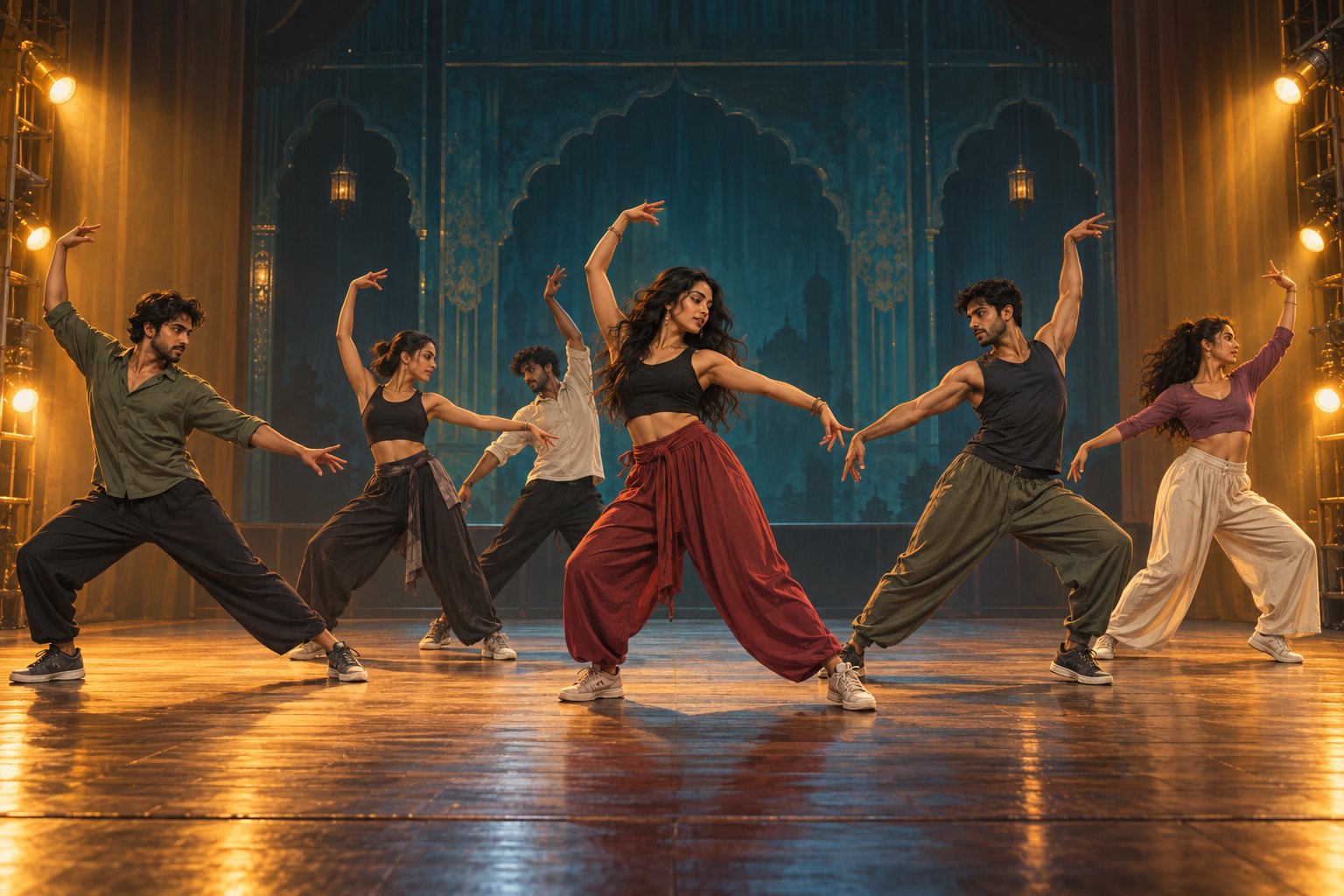
Lena Khan’s Best of the Best, a Bollywood fusion dance movie for Netflix, has an especially intriguing piece of performance direction attached to it: asking Maitreyi Ramakrishnan to bring “Channing Tatum energy.” Highlighted in Variety’s interview coverage alongside Khan’s collaboration with Hasan Minhaj, the phrase raises a useful question about the movie’s creative ambitions. What makes someone compelling to watch when movement becomes the main means of expression?
My reading is that the instruction points toward presence: the conviction that makes a gesture feel intentional and a performer seem capable of holding the screen. That is an interpretation of the reported direction, rather than a claim about Khan’s full explanation. It also offers a productive way into the project without assigning its characters unverified motivations or treating a filmmaking interview as evidence of a finished film’s success.
This is spoiler-free commentary on the film’s reported creative approach, not a screening-based review. The distinction matters here: the available information supports discussion of Khan, the performers, and the Bollywood fusion premise, but does not establish specific scenes, character arcs, or dialogue.
What “Channing Tatum Energy” Can Mean for a Performance
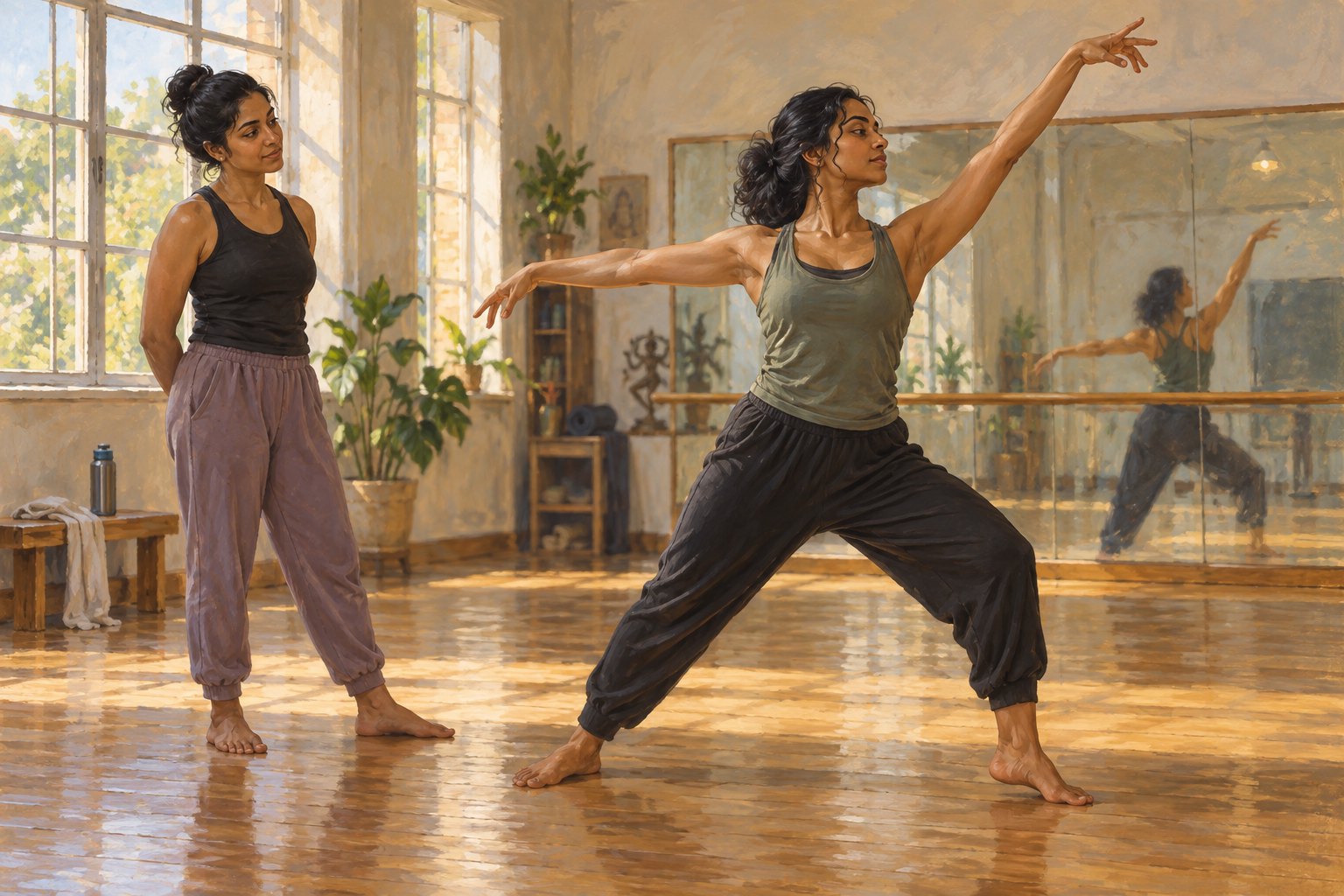
An actor can execute a movement correctly without making it dramatically interesting. The missing ingredient may be intention. Is the character inviting attention, daring someone to look away, or trying to conceal nervousness? Those possibilities can give the same physical action very different meanings.
Read as a performance cue, Khan’s reference suggests confidence that extends through the whole body. A look, a shift of weight, and the pause before a movement can establish authority before the choreography becomes complicated. For Ramakrishnan, the interesting creative possibility is the relationship between physical command and whatever emotional uncertainty her character carries. Confidence becomes more expressive when it has something to push against.
There is also a distinction between borrowing a quality and imitating a person. A recognizable star’s name can function as shorthand during rehearsal, but the resulting performance still needs its own identity. My preference would be for the reference to unlock boldness while preserving Ramakrishnan’s individual rhythms. A comparison is useful when it opens possibilities; it becomes restrictive when viewers can see only the model.
The phrase should not be mistaken for dialogue from Best of the Best, evidence of a Tatum appearance, or confirmation of an on-screen homage. Its interest lies in what it suggests about directing an actor’s relationship with the camera.
Reading Character Through Movement
The most useful character question for a dance movie is deceptively simple: what does this person want someone else to see? A dancer might seek admiration, acceptance, authority, or the freedom to stop performing a socially acceptable version of themselves. These are interpretive possibilities, not established plot points in Khan’s film.
They offer a way to evaluate physical storytelling. Watch where a performer directs their attention. Someone checking another dancer’s reaction creates a different impression from someone playing confidently to the room. Watch the moments between combinations, too. A recovery, hesitation, or change in posture can reveal a relationship that a polished sequence alone cannot.
This is why technical improvement and character development should not automatically be treated as the same thing. A person can become more accomplished while remaining emotionally guarded. Conversely, an imperfect performance can express a meaningful change if the character finally risks being seen. A convincing dance narrative makes the difference legible.
Bollywood Fusion Needs More Than Visual Variety
The description “Bollywood fusion” supplies the project’s clearest artistic premise. It also creates expectations that deserve more careful attention than simply anticipating colorful spectacle. Fusion becomes interesting when different movement choices feel connected to the people making them.
For this critic, the strongest possibility is that choreography can express taste and self-definition. The way performers combine influences might communicate how they want to belong, stand apart, or be understood. That does not require every dance to become a statement about identity. Pleasure, humor, and showing off are expressive choices in their own right.
The potential weakness would be treating the fusion concept as decoration: an assortment of attractive gestures without a dramatic relationship between them. A useful viewing question is whether the movement tells us something that the dialogue cannot. If a sequence could be exchanged for any other energetic number without changing its emotional meaning, its connection to character may be thin.
Specificity can make a film accessible. An audience does not need to recognize every influence to understand the tension between wanting personal distinction and needing to move with other people. The filmmaking must give that tension a readable shape.
Hasan Minhaj and the Question of Shared Attention
Khan’s work with Hasan Minhaj is another focus of the interview coverage. That collaboration is a confirmed part of the discussion; particular claims about his character, scenes, or contribution require more evidence. The editorial question it raises is how a film balances distinctive personalities within a form built around coordinated performance.
Dance makes that problem visible. One person can attract attention while another provides the reaction that gives the moment meaning. An ensemble becomes dramatically interesting when those exchanges feel reciprocal. Supporting performers need recognizable intentions even when they are not at the center of the frame.
It is a related concern to the one explored in our commentary on building characters around an ensemble cast: recognizable names create curiosity, but relationships create investment. For Best of the Best, the relevant test is whether individual presence strengthens the shared experience.
The Camera Has to Make Effort Readable
Khan’s performance direction also puts a responsibility on the filmmaking. Asking an actor for physical confidence means little if the viewer cannot read the body in space. Framing, shot duration, and editing determine whether movement feels like an action someone accomplishes or an impression assembled from fragments.
Wide shots can establish coordination and scale. Close-ups can reveal concentration, embarrassment, or a moment of recognition. Neither approach is inherently superior; the question is what the scene needs us to understand. Cutting closer gains emotional information only if it does not lose the physical relationship that makes the emotion meaningful.
That link between bodily effort and characterization also informs our analysis of physical performance in Gina Rodriguez’s boxing project. In both contexts, convincing exertion can help make a character’s choices tangible. Spectacle gains weight when the audience understands what producing it costs.
The Deeper Possibility: Confidence as a Relationship
The most promising implication of Khan’s reported direction is that confidence can be treated as an action rather than a fixed personality trait. Someone claims space, commits to a gesture, or accepts another person’s attention. The body makes a choice before the character necessarily knows how to explain it.
In an ensemble dance movie, that idea becomes more complicated and more interesting. Personal assurance must coexist with listening, timing, and adjustment. Commanding attention is only one kind of strength; making room for another performer can be equally revealing.
That is the standard I would bring to Best of the Best. The memorable instruction creates an appealing expectation of bold physical presence. Its deeper potential lies in whether that presence helps express distinct people and meaningful relationships. A striking move gets our attention. Understanding why someone needs to make it is what can make the moment stay.
Original content by this site's editorial team. Published: September 19, 2026 at 02:30:36 PDT (Los Angeles time)